
Bonded Title Bond Amount Explained
Blog post description.
2/9/202617 min read
Bonded Title Bond Amount Explained: How It’s Calculated, Why It Matters, and How to Get It Right the First Time
If you’re staring at a DMV form that mentions a bonded title and a bond amount, you’re probably feeling a mix of confusion, anxiety, and urgency.
That’s normal.https://bondedtitleusa.com/get-bonded-title-usa-ebook
A bonded title is often the last legal doorway between you and a vehicle you already paid for, repaired, restored, inherited, or rescued from paperwork limbo. And the bond amount? That single number can decide whether the process is smooth… or turns into months of delays, rejected applications, wasted fees, and rising frustration.
This guide is written to eliminate that uncertainty.
Not with vague explanations or recycled DMV language—but with clear, practical, real-world breakdowns of how bonded title bond amounts actually work across the United States, why they’re set the way they are, how states calculate them, how to avoid overpaying, and how to make sure your bond is accepted the first time.
There is no summarizing, no fluff, and no shortcuts here. This is the long-form, authoritative explanation people wish they had before walking into the bonded title process.https://bondedtitleusa.com/get-bonded-title-usa-ebook
What a Bonded Title Really Is (Beyond the DMV Definition)
Before we dissect bond amounts, you need to understand what a bonded title actually represents in legal and financial terms.
A bonded title is not a special kind of ownership.
It is not a temporary title.
It is not a workaround or loophole.
A bonded title is a state-sanctioned risk-management tool.
Here’s the core idea:
The state issues you a title even though full ownership proof is missing, but only if someone financially guarantees that no rightful owner will be harmed.
That “someone” is the surety bond.
The bond exists to protect:
Prior legal owners
Lienholders
Financial institutions
The state itself
If someone later proves they had a valid claim to the vehicle before you, the bond pays them—not you, and not the state.
This is why the bond amount matters so much. It defines how much financial protection is being guaranteed.
Why the Bond Amount Is the Most Critical Part of the Process
Many people obsess over:
Where to buy the bond
How much the bond costs
How fast it can be issued
But the bond amount is the foundation. If it’s wrong, everything collapses.
An incorrect bond amount can cause:
Immediate DMV rejection
Forced rebonding (paying twice)
Restarting the entire application
Delays of 30–120 days
Vehicle registration denial
Sale problems years later
And here’s the uncomfortable truth:
The DMV will not correct your bond amount for you.
They will simply reject it.
That’s why understanding how bond amounts are calculated—and how states interpret value—is essential.
What the Bond Amount Actually Represents
The bonded title bond amount is not:
What you paid for the vehicle
What the vehicle is worth to you
What you plan to sell it for
The bond amount represents the maximum potential financial damage that could be caused if someone else proves ownership or lien rights.
That damage includes:
Vehicle value
Outstanding liens
Financial losses tied to possession
In some states, administrative or legal costs
Because of that, most states require the bond amount to be equal to or greater than the vehicle’s appraised or assessed value.
Often, it’s 1.5x to 2x that value.
The Three Core Models States Use to Set Bond Amounts
Across the U.S., bonded title bond amounts are calculated using one of three main models. Some states blend them, but nearly all fall into one of these categories.
1. Fixed Multiplier of Vehicle Value (Most Common)
This is the most widespread approach.
The state determines the vehicle’s value, then requires a bond equal to:
1.5× the value, or
2× the value
Example:
Vehicle value: $6,000
Required bond: $12,000 (2× model)
This creates a financial buffer to protect potential claimants.
States using this model often specify the multiplier clearly in their statutes or DMV manuals.
2. DMV-Assigned Value Model
Some states don’t care what you paid or what market listings show.
Instead, the DMV:
Uses an internal valuation system
References tax databases
Applies standard depreciation tables
The bond amount is based on their number, not yours.
This can be frustrating—but it’s non-negotiable.
If the DMV says the vehicle is worth $9,500, your bond must match their calculation, even if you bought it for $2,000.
3. Appraisal-Based Bond Amount
In certain states or situations, you are required (or allowed) to submit:
A licensed dealer appraisal
A certified mechanic valuation
A professional appraisal form
The bond amount is then calculated using that appraisal figure.
This model can work for or against you, depending on how prepared you are.
A sloppy appraisal often results in:
Inflated value
Overbonding
Higher bond premiums
Unnecessary expense
A precise, defensible appraisal can save you hundreds.
What the Bond Amount Is Not Tied To
This is where people make costly mistakes.
The bond amount is not based on:
The bond premium you pay
Your credit score
Your income
Your insurance coverage
Your reason for needing a bonded title
Those factors affect bond cost, not bond amount.
Bond amount is about vehicle risk exposure, not personal finances.
Bond Amount vs Bond Cost: The Confusion That Traps People
Let’s clear this up cleanly.
Bond Amount = the face value of the bond (e.g., $10,000)
Bond Cost (Premium) = what you pay to buy the bond (e.g., $100–$200)
You never pay the full bond amount unless a claim is made and you are found liable.
Most bonded title bonds cost 1%–2% of the bond amount for people with average credit.
Example:
Bond amount: $15,000
Bond cost: $150–$300 (one-time)
This is why people panic when they hear a high bond amount—but then feel relief when they see the actual cost.
Still, overbonding means overpaying.
Why States Require Bond Amounts Higher Than Vehicle Value
You might wonder why states don’t just match the bond amount to the car’s value.
There are three reasons.
1. Hidden Liens Exist More Often Than People Admit
Vehicles change hands informally all the time:
Estate sales
Abandoned property
Private cash deals
Non-title states
Family transfers
Liens don’t always show up cleanly.
The bond amount needs to cover worst-case exposure, not best-case assumptions.
2. Market Value Is Not Static
Vehicle values change.
A car that was worth $4,000 two years ago might be worth $7,000 today due to:
Market shortages
Collector demand
Restoration work
The bond needs to protect future claims, not just past value.
3. Administrative and Legal Costs Matter
In some states, bond claims can include:
Legal fees
Administrative costs
Storage or recovery expenses
The multiplier provides room for those scenarios.
Common Situations That Trigger Bonded Title Requirements
Understanding why you’re being asked for a bond helps explain how much the bond needs to be.https://bondedtitleusa.com/get-bonded-title-usa-ebook
No Title from Seller
The most common scenario.
You bought a vehicle, but:
Seller lost the title
Seller never transferred it
Seller disappeared
The state cannot verify ownership continuity—so the bond fills the gap.
Title Was Lost Before Registration
You acquired the vehicle legally, but the title was lost before it was ever transferred into your name.
Even with bills of sale, the chain is incomplete.
Abandoned or Storage Lien Vehicles
Vehicles left on property, in repair shops, or in storage often qualify for bonded titles—but only after bond protection is in place.
Inherited Vehicles Without Probate Documentation
Family transfers without formal probate can leave title gaps that require bonding.
Non-Title States Transfers
Vehicles coming from states that don’t issue titles for certain years or vehicle types often trigger bonded title requirements when crossing state lines.
How the DMV Determines Vehicle Value for Bond Amounts
This is where precision matters.
States typically use one or more of the following:
Standard valuation guides
Tax assessment values
Internal DMV databases
Dealer appraisal forms
Inspection reports
If you walk in unprepared, you lose control of the number.
If you walk in with documentation, you can influence the outcome.
How Mileage, Condition, and Damage Affect Bond Amount
This is a critical leverage point.
High mileage, mechanical issues, or cosmetic damage should lower the appraised value, and therefore the bond amount.
But only if properly documented.
Examples that matter:
Engine or transmission issues
Salvage or rebuilt history
Structural damage
Non-operational status
Missing components
Without proof, the DMV assumes average condition.
The Cost of Getting the Bond Amount Wrong
This deserves its own section because it happens constantly.
Scenario 1: Underbonding
You submit a bond for less than required.
Result:
Immediate rejection
Lost bond premium
Restarted timeline
Surety companies rarely refund issued bonds.
Scenario 2: Overbonding
You submit a bond higher than required.
Result:
Higher premium
No benefit
Locked-in expense for years
You can’t downgrade later.
Scenario 3: Incorrect Valuation Source
You used:
Online listing prices
Seller statements
Personal estimates
The DMV uses their own value.
Result:
Rejection
Rebonding
Lost fees
How Long the Bond Must Remain Active
Most states require bonded title bonds to remain in effect for:
3 years
5 years (less common)
During this period:
The bond protects prior claimants
You are the registered owner
The title is usually marked “bonded”
After the period expires:
The bond obligation ends
The title can be converted to a standard title
No further bond is required
This is why getting the amount right upfront matters—it’s locked in for years.
Can Someone Actually File a Claim Against the Bond?
Yes. But it’s rarer than people fear.
A valid bond claim requires:
Proof of prior ownership or lien
Evidence the claim predates your title
Legal standing
Formal claim process
Most bonded titles expire without incident.
But the bond amount must be sufficient just in case.
Real-World Example: How Bond Amounts Differ by State
Let’s look at a realistic scenario.
2015 sedan
Average condition
Market value: $7,000
Depending on state rules:
State A (1.5×): $10,500 bond
State B (2×): $14,000 bond
State C (DMV valuation): $8,900 × 2 = $17,800 bond
Same car. Very different bond amounts.
This is why generic advice fails—and why state-specific guidance matters.
Why Bond Amount Errors Kill High-Intent DMV Applications
People approaching bonded titles are usually:
Trying to register quickly
Planning to sell the vehicle
Needing insurance
Facing inspection deadlines
Dealing with storage fees
A bond rejection resets the clock.
In some states, that means:
New inspections
New affidavits
New forms
New fees
The bond amount is not a detail—it’s the keystone.
How to Protect Yourself Before Purchasing the Bond
Before you pay anything, you should have:
Written DMV bond amount requirement
Confirmed valuation source
Required multiplier
Approved appraisal form (if applicable)
Never guess.
Never assume.
Never trust online calculators without state confirmation.
Emotional Reality: Why This Process Feels So Stressful
Let’s be honest.
People dealing with bonded titles are often:
Already financially invested
Emotionally attached to the vehicle
Afraid of losing money
Frustrated with bureaucracy
Under time pressure
The bond amount feels like a judgment—and a risk.
But when handled correctly, it’s simply a temporary safeguard, not a threat.
Clarity removes fear.
The Smart Way to Handle Bond Amounts (What Pros Do)
Professionals don’t:
Walk in blind
Accept inflated numbers
Rush the bond purchase
Skip documentation
They:
Control valuation
Document condition
Confirm state rules
Lock the correct amount
Buy the bond once
That’s the difference between a smooth approval and a DMV nightmare.
Why Generic Online Advice Fails for Bonded Titles
Most articles:
Oversimplify
Ignore state variation
Skip valuation nuance
Confuse bond cost with bond amount
Leave readers guessing
That’s dangerous in a process where one wrong number voids the entire application.
This Is Where Most People Mess Up (And Pay for It)
They:
Buy the bond before the DMV tells them the amount
Use Kelley Blue Book without approval
Ignore damage documentation
Trust sellers’ valuations
Assume cheaper is better
The DMV doesn’t care about assumptions.
Only compliance.
If You Want Zero Guesswork, Zero Rejection, and Zero Overpayment
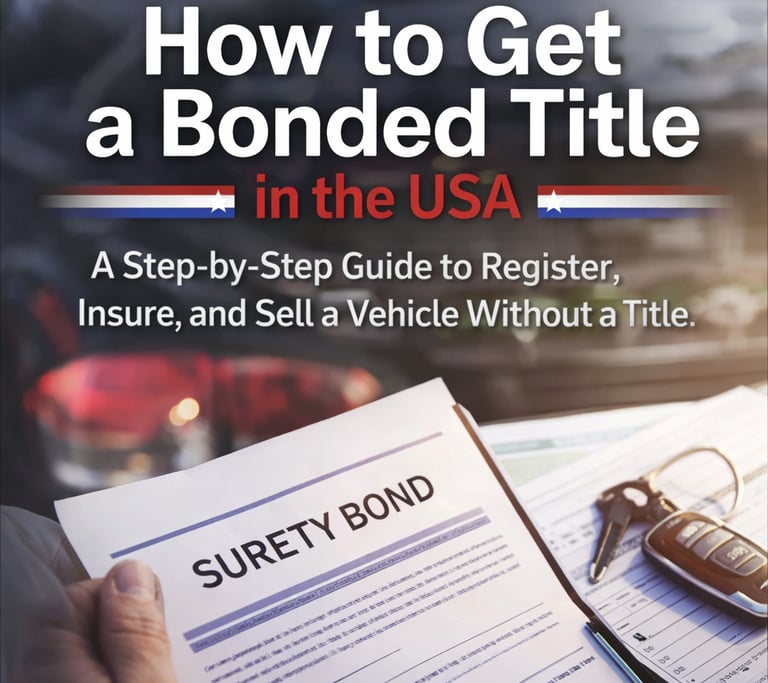
This is exactly why the Get Bonded Title USA Ebook exists.
It doesn’t give you theory.
It gives you:
State-by-state bond amount rules
Approved valuation methods
Exact multipliers
Real DMV form examples
Mistake-proof workflows
Rejection-avoidance strategies
So you buy the bond once, submit once, and get approved once.
If you’re serious about fixing your title situation without delays, wasted money, or DMV roulette, the next step is simple:
Get the Get Bonded Title USA Ebook and follow the same process professionals use to handle bond amounts correctly—every time.
And once you see how cleanly this can be done, you’ll wonder why anyone tries to wing it in the first place.
continue
…first place.
Advanced Bond Amount Scenarios That Catch People Off Guard
Once you understand the basics, the real danger lives in edge cases—situations where the bond amount calculation is technically correct under the law, but still surprises applicants and blows up budgets or timelines.
These are not rare. They’re common enough that DMV clerks expect them—but applicants don’t.
Let’s go through them carefully.
Scenario 1: Vehicle Is Worth Less Than the Bond Amount (And That’s Normal)
One of the most emotionally jarring moments in this process is when someone hears:
“Your bond amount will be $20,000.”
And they respond:
“But the car isn’t worth anywhere near that.”
Both statements can be true.
Here’s why.https://bondedtitleusa.com/get-bonded-title-usa-ebook
If your state requires 2× the vehicle value, and the DMV assigns a value based on:
Original MSRP
Standard depreciation tables
No damage assumptions
Then even a rough, high-mileage vehicle can generate a surprisingly high bond amount.
Example:
Original MSRP: $32,000
DMV-assessed value (after depreciation): $10,500
Required bond: $21,000
Meanwhile, the vehicle might only sell for $6,000 privately.
This is not a mistake. It’s a risk buffer.
The bond is not about resale reality. It’s about legal exposure.
Scenario 2: Rebuilt, Salvage, or Flood Vehicles
This is one of the biggest missed opportunities to reduce bond amounts—if handled correctly.
Many applicants assume:
“Since it’s salvage, the bond will automatically be lower.”
That is not guaranteed.
If the DMV’s valuation system does not automatically account for salvage status, the bond amount will still be based on clean-title assumptions.
To reduce the bond amount, you must provide:
Salvage title documentation
Rebuilt inspection reports
Repair invoices
Photos showing condition before and after repair
Without this, the bond amount stays high.
With it, the value—and therefore the bond—can drop dramatically.
Scenario 3: Non-Operational Vehicles
A vehicle that does not run, cannot be driven, or fails inspection should be valued lower.
But again—only if proven.
You need:
Non-op affidavit (if available)
Mechanic statement
Failed inspection report
Tow receipts
Parts invoices
Otherwise, the DMV assumes operable condition.
And that assumption directly inflates the bond amount.
Scenario 4: Classic, Antique, or Collector Vehicles
This scenario cuts both ways.
Classic vehicles often:
Have missing paperwork
Change hands informally
Trigger bonded title requirements
But their value can be unpredictable.
A DMV clerk may:
Assign a generic low value based on year
Or, assume collector value without proof
Both outcomes can be wrong.
If the vehicle has collector value, underbonding can cause rejection later.
If it does not, overbonding wastes money.
The solution is a certified appraisal that clearly states:
Market category
Condition class
Realistic valuation
This protects you in both directions.
Scenario 5: Vehicles Purchased for Parts or Projects
This one hits restorers hard.
You buy a vehicle:
Non-running
Missing parts
Clearly a project
But the DMV’s system doesn’t know that.
Unless you document:
Missing engine
Missing transmission
Structural rust
Frame damage
The bond amount will reflect a “complete vehicle.”
That difference can be tens of thousands of dollars.
The Psychological Trap: “I’ll Just Pay It and Move On”
Many people overbond simply to avoid conflict or delays.
They think:
“It’s only $200 more—whatever.”
But here’s what they don’t realize:
The bond is locked for years
The premium is non-refundable
Overbonding sets a precedent
Future buyers may question inflated values
You normalize unnecessary cost
Professional applicants don’t do this.
They control the number before buying the bond.
What Happens If the Vehicle Is Sold During the Bond Period?
This is another area where bond amounts matter more than people expect.
If you sell a vehicle with a bonded title:
The bond remains active
The title stays marked “bonded”
The bond amount still governs exposure
If the bond amount was inflated, that inflated exposure follows the vehicle.
This can:
Scare off buyers
Reduce resale value
Force discounts
Delay closing the sale
Correct bond amounts protect not just approval—but liquidity.
Can the Bond Amount Ever Be Reduced Later?
Almost always: no.
Once the bond is issued and accepted:
The amount is fixed
The bond term runs its course
Reissuance is rarely allowed
Even if you later prove the vehicle was worth less, it usually doesn’t matter.
This is why the setup phase is everything.
Bond Amounts and Insurance: A Common Misunderstanding
Insurance agents often get dragged into this conversation—and give bad advice.
Insurance coverage:
Protects against accidents
Covers damage or liability
Has nothing to do with ownership disputes
Bond amounts:
Protect prior owners
Cover title defects
Are legally separate instruments
You cannot:
Substitute insurance for a bond
Reduce bond amount because of insurance
Offset bond exposure with coverage
The DMV treats them as unrelated.
The Role of Surety Companies in Bond Amounts (Spoiler: Minimal)
Here’s something people assume incorrectly:
“The bond company will tell me what amount I need.”
They won’t.
Surety companies:
Do not set bond amounts
Do not interpret DMV rules
Do not verify correctness
They issue exactly what you request.
If you request the wrong amount, they’ll issue the wrong bond—happily.
And the DMV will reject it—happily.
Responsibility stays with you.
How Credit Score Does (and Does Not) Affect Bond Amount
Credit score affects:
Bond premium percentage
Approval likelihood
It does not affect:
Bond amount
DMV valuation
Required multiplier
Someone with perfect credit and someone with bad credit can be required to post the same bond amount.
The difference is only cost—not obligation.
Bond Amounts for Motorcycles, Trailers, and Specialty Vehicles
Bonded title rules don’t stop at cars.
Motorcycles
Often valued higher than expected
Collector status common
Theft risk increases scrutiny
Trailers
Commercial vs personal matters
Weight ratings affect value
Missing VIN plates complicate valuation
RVs and Campers
Interior condition matters
Appliances and systems count
DMV values can be extremely high
Each category has unique valuation pitfalls that affect bond amounts.
The Hidden Risk of Using Online “Bond Amount Calculators”
Many websites offer quick calculators.
They are dangerous.
Why?
Because they:
Use national averages
Ignore state multipliers
Ignore DMV valuation sources
Ignore inspection requirements
They create false confidence.
A wrong bond amount costs far more than taking the time to verify properly.
How Long Bond Amount Rules Stay in Effect
Bond amount rules are:
Set by statute
Updated periodically
Sometimes changed quietly
What was correct two years ago may not be correct today.
This is especially true after:
DMV system upgrades
Legislative changes
Fraud crackdowns
Relying on old advice is risky.
The Administrative Reality: DMV Clerks Are Not Advisors
This is uncomfortable but true.
DMV staff:
Process applications
Enforce rules
Do not coach applicants
If your bond amount is wrong, they won’t:
Suggest corrections
Propose alternatives
Offer strategy
They will simply reject the application.
Preparation is your responsibility.
The Emotional Cost of Rejection (And Why It’s Avoidable)
Rejection doesn’t just cost money.
It costs:
Time
Momentum
Motivation
Confidence
People often describe bonded title rejection as:
“Defeating”
“Humiliating”
“Infuriating”
Especially after they thought they “did everything right.”
Almost always, the root cause is bond amount misunderstanding.
What “High-Intent” Applicants Do Differently
High-intent applicants—the ones who succeed cleanly—follow a pattern.
They:
Confirm bond amount in writing
Control valuation inputs
Document condition aggressively
Buy the bond once
Submit once
Get approved once
They don’t guess.
They don’t rush.
They don’t wing it.
The Bond Amount Is Not a Bureaucratic Detail—It’s a Legal Commitment
When you sign a bonded title bond, you are:
Entering a legal agreement
Accepting potential liability
Representing vehicle value
Committing for years
This deserves the same care as:
Buying real estate
Signing loan documents
Registering a business
Treating it casually is expensive.
Why DIY Applicants Struggle—and Professionals Don’t
Professionals:
Know state multipliers
Anticipate DMV objections
Preempt valuation inflation
Use correct forms
Avoid overbonding
DIY applicants:
Rely on Google
Mix state rules
Guess values
Buy first, ask later
The difference is not intelligence—it’s information.
This Is Exactly Why the “Get Bonded Title USA Ebook” Exists
This process is not hard—but it is precise.
The ebook exists to eliminate:
Guesswork
Overpayment
Rejection
Delays
Stress
Inside, you get:
State-by-state bond amount rules
Approved valuation methods
Exact multipliers
Real DMV examples
Condition documentation strategies
Step-by-step workflows
So you don’t learn the hard way.
If You’re Serious About Getting This Done Right
If you’ve read this far, you’re not casually browsing.
You’re trying to:
Register a vehicle
Protect your investment
Avoid rejection
Finish this once and for all
The fastest, safest path forward is simple:
👉 Get the Get Bonded Title USA Ebook
Follow the same process professionals use to calculate bond amounts correctly, avoid overbonding, prevent rejections, and walk out with an approved bonded title—without wasted money or DMV roulette.
And once you’ve done it right, you’ll realize something important:
This was never about luck.
It was always about knowing the rules before you played the game.
continue
…from the start.
Deep Dive: How Bond Amounts Interact With Title History Gaps
One of the least understood aspects of bonded title bond amounts is how title history gaps silently inflate risk—and therefore inflate the bond amount—without applicants realizing it.
A title history gap occurs when there is:
An unrecorded transfer
A missing owner in the chain
A long period where the vehicle was unregistered
A mismatch between VIN records and ownership records
Even if you did nothing wrong, the state sees uncertainty.
And uncertainty equals risk.
Risk equals higher bond exposure.
Why Gaps Matter More Than the Vehicle Itself
The bond amount is not only tied to the physical vehicle.
It is tied to potential claims.
A clean, low-value vehicle with a severe title gap can require a higher bond than a higher-value vehicle with a clean, traceable history.
Why?
Because a claimant doesn’t need to prove the car is valuable.
They need to prove:
They owned it
Or had a lien on it
And that ownership predates yours
The bond must be large enough to cover that possibility.
Title Gaps That Trigger Higher Scrutiny
Some title gaps almost always trigger higher bond amounts or stricter valuation rules:
Vehicles last titled more than 5–7 years ago
Vehicles transferred across multiple states without registration
Vehicles bought from estate sales without probate
Vehicles sold by tow yards without full lien enforcement
Vehicles from defunct dealerships
Vehicles coming from dissolved LLCs or businesses
In these cases, the DMV assumes maximum plausible exposure, not minimum.
Bond Amounts and Interstate Transfers
Interstate transfers are a hidden landmine.
Here’s why.
Each state has:
Different title retention rules
Different lien recording systems
Different non-title thresholds
When a vehicle crosses state lines:
Title data may not transfer cleanly
Lien releases may not propagate
Ownership gaps widen
As a result, the receiving state often:
Revalues the vehicle independently
Applies its own multiplier
Requires a higher bond than expected
Applicants are shocked—but the DMV is simply protecting itself.
Non-Title States and Bond Amount Shock
Non-title states (for certain vehicle ages) create a perfect storm.
You may come from a state where:
Titles were never issued
Bills of sale were sufficient
Registration was enough
But the new state doesn’t care.
From their perspective:
There is no ownership proof
No lien history
No centralized record
The bond amount becomes the entire safety net.
This is why bond amounts for vehicles from non-title states are often:
Higher
Non-negotiable
Strictly enforced
Bond Amounts and Commercial Vehicles
Commercial vehicles introduce another layer of complexity.
Commercial designation can:
Increase valuation
Increase potential claim exposure
Trigger higher multipliers
Why?
Because commercial vehicles often:
Generate income
Carry business liens
Have tax implications
Are financed differently
A bonded title for a commercial truck or van may require:
Higher bond amount
Additional affidavits
Proof of business dissolution or transfer
Ignoring the commercial angle leads to rejection.
When the DMV Overrides Your Appraisal
This is a painful but real scenario.
You submit:
A licensed appraisal
Photos
Documentation
And the DMV still assigns a higher value.
Why does this happen?
Usually because:
The appraisal doesn’t meet statutory criteria
The appraiser isn’t approved
The form is outdated
The appraisal lacks VIN verification
The condition description is vague
In these cases, the DMV is legally allowed to override your number.
And when they do, their number controls the bond amount.
How to Make an Appraisal “Bond-Proof”
An appraisal that actually influences bond amount must include:
Full VIN verification
Mileage disclosure
Condition grading (with explanation)
Market basis (private sale vs retail)
Damage disclosure
Signatures and credentials
Date within required window
Anything less is treated as advisory—not binding.
Bond Amounts and Vehicles With Multiple VIN Issues
VIN issues are one of the fastest ways to inflate bond amounts.
Examples include:
VIN plate replaced
Partial VIN missing
VIN mismatch between frame and dashboard
Altered or damaged VIN tag
Even if legally resolved, these issues:
Increase fraud risk
Increase claim exposure
Increase bond amounts
In some states, VIN issues alone justify the maximum multiplier.
The Relationship Between Bond Amount and Bond Term
Most people assume:
“Higher bond amount means longer bond term.”
That’s not true.
Bond term is set by statute:
Typically 3 years
Occasionally 5 years
Bond amount does not shorten or lengthen the term.
But here’s the subtle reality:
A higher bond amount means:
Higher exposure for longer
Greater potential liability
More anxiety during the bond period
Which is another reason professionals minimize it legally.
What Happens If a Claim Is Filed Near the End of the Bond Period
This question comes up often.
If a claim is filed:
Before the bond expires
During the bond term
The bond remains in force until the claim is resolved, even if the term technically ends.
That’s why bond amount accuracy matters for the entire duration—not just approval day.
Bond Amounts and Bankruptcy or Financial Judgments
This is rare—but critical.
If you are subject to:
Bankruptcy proceedings
Active judgments
Asset restrictions
Some surety companies may:
Increase premium
Decline issuance
Require collateral
But the bond amount itself does not change.
The DMV does not care about your finances.
They care about exposure.
The Silent Risk: Future Legislative Changes
Bonded title statutes can change.
What happens if:
Multipliers increase
Bond terms extend
Claim windows expand
Your bond amount stays fixed—but future claims may be interpreted under new rules.
This is another reason to avoid inflated amounts.
You don’t want unnecessary exposure under evolving law.
Bond Amounts and Digital Title Systems
As states move to digital titles:
Data sharing improves
Historical claims become easier
Fraud detection increases
This makes:
Accurate bond amounts more important
Overbonding more visible
Errors harder to undo
The system is becoming less forgiving—not more.
The Myth of “No One Ever Files a Claim”
Most bonds expire cleanly.
That’s true.
But the few claims that do occur:
Are expensive
Are stressful
Are legally complex
And the bond amount defines:
Maximum payout
Your reimbursement obligation
Your financial risk
You don’t want that number inflated “just in case.”
The Professional Mindset: Minimize Legal Exposure, Not Just Cost
Cost-focused applicants ask:
“What’s the cheapest bond?”
Professional applicants ask:
“What’s the correct bond amount with the lowest legal exposure?”
Those are not the same question.
Why Bond Amount Precision Is a Form of Asset Protection
Your bonded title vehicle is an asset.
Incorrect bond amounts can:
Complicate resale
Affect insurability perceptions
Trigger buyer skepticism
Create legal noise
Precision protects value.
The Most Expensive Mistake: Buying the Bond First
This mistake deserves repetition because it happens constantly.
People:
Buy the bond online
Then visit the DMV
Then learn the amount is wrong
By then:
Premium is paid
Bond is issued
Refund is unlikely
Always confirm amount before purchase.
Always.
If This Feels Overwhelming, That’s Because It Is—Without a System
The bonded title bond amount process is not intuitive.
It blends:
Law
Valuation
Risk management
Bureaucracy
Trying to piece it together from forums and blogs is exhausting.
That’s why people fail—not because they’re careless, but because the system is unforgiving.
The Shortcut Is Not Cutting Corners—It’s Using the Right Playbook
There is no shortcut that bypasses rules.
But there is a shortcut that bypasses mistakes.
That shortcut is using a proven, state-specific framework instead of guessing.
Final Reality Check Before You Move Forward
Ask yourself honestly:
Do I know my state’s exact bond multiplier?
Do I know which valuation source the DMV will accept?
Do I know how my vehicle’s condition affects value?
Do I know how title gaps affect exposure?
Do I know the consequences of overbonding?
If the answer to any of those is “no,” then winging it is a gamble.
This Is Where You Stop Guessing and Start Doing It Right
The Get Bonded Title USA Ebook exists for one reason:
To give you the same clarity professionals use so you don’t:
Overpay
Get rejected
Restart
Stress out
Lose time or money
It walks you through:
Bond amount calculation
Valuation control
Documentation strategy
State-by-state rules
Submission workflows
So you buy the bond once, submit once, and get approved.
If You’re Ready to End the Uncertainty
You don’t need more opinions.
You need a correct bond amount, backed by the right documentation, accepted on the first try.
👉 Get the Get Bonded Title USA Ebook https://bondedtitleusa.com/get-bonded-title-usa-ebook
And turn a confusing, high-risk process into a controlled, predictable outcome—without wasted money, without DMV roulette, and without learning the hard way.
BondedTitleUSA.com is an informational resource and does not provide legal advice. DMV rules vary by state.
Contact
infoebookusa@aol.com
© 2026. All rights reserved.