Buying the Bond Too Early: A Costly Error
Blog post description.
3/15/202620 min read
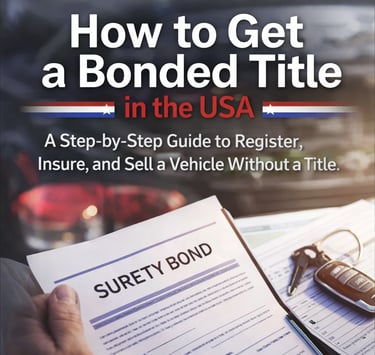
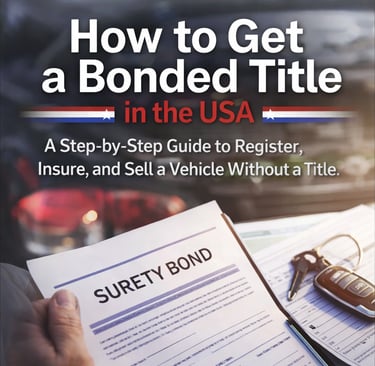
Buying the Bond Too Early: A Costly Error
Buying a bonded title is already one of the most stressful, confusing, and high-stakes processes an ordinary vehicle owner can face in the United States. You’re dealing with the DMV, legal ownership questions, surety companies, state statutes, potential prior owners, and strict timelines. One wrong move can cost you hundreds or even thousands of dollars—and in many cases, it can permanently block you from ever obtaining a valid title.
Among all the mistakes people make during the bonded title process, one stands out as uniquely destructive:
Buying the bond too early.https://bondedtitleusa.com/get-bonded-title-usa-ebook
This single error quietly destroys more bonded title applications than almost any other issue. It’s not obvious. It sounds logical to “get the bond first.” And in many online forums, Reddit threads, Facebook groups, and even some surety bond websites, people are actively encouraged to do it.
But here’s the hard truth:
Buying the bond before the DMV explicitly instructs you to do so can invalidate your application, waste your money, and force you to start over—sometimes permanently.
This article explains, in painful detail, why buying the bond too early is such a costly error, how people fall into this trap, what actually happens behind the scenes at the DMV, and exactly how to avoid it. If you’re serious about protecting your money, your vehicle, and your sanity, you need to understand this before you make a single purchase.
The Illusion of “Getting Ahead”
Most people who buy a bond too early are not careless. They’re proactive.
They’re trying to be responsible.
They want to move fast.
They want to show the DMV they’re serious.
And they assume that buying the bond early will speed things up.
This assumption is deadly.
Here’s the typical thought process:
“I already know I need a bonded title.”
“The bond amount will probably be based on the vehicle value.”
“I’ll just buy the bond now so I’m ready.”
“Then I’ll submit everything together and avoid delays.”
On paper, this sounds efficient.
In reality, it’s a procedural landmine.
Because the bonded title process is not driven by what you think you need—it’s driven by what the DMV formally authorizes you to do, in a specific order, under state law.
And that order matters more than most people realize.
Why the DMV Cares About Timing
The DMV doesn’t treat a bonded title like a regular title replacement. It’s a conditional legal instrument. The bond exists to protect the state and any prior owner who might later assert a claim.
That means the bond is not just a generic insurance product. It is legally tied to:
A specific vehicle
A specific VIN
A specific appraised value
A specific applicant
A specific statutory requirement
A specific bond amount
A specific timeframe
Until the DMV reviews your situation and determines that a bonded title is appropriate—and under what terms—there is no legal basis for the bond.
Buying it early is like buying insurance for a house before the bank agrees to issue the mortgage. The product may exist, but it’s not valid for your situation yet.
The Critical Step People Skip
Every bonded title process includes a gatekeeping step that must happen before the bond is purchased:
DMV authorization or instruction.
Depending on the state, this may take different forms:
A formal bonded title eligibility letter
A DMV checklist explicitly stating the bond amount
A rejected title application with instructions to obtain a bond
A completed vehicle inspection and valuation
A written determination that no prior title can be issued
What matters is not the format.
What matters is that the DMV must first decide:
That a bonded title is required
That you are eligible to apply
What bond amount is legally required
Until that decision exists, any bond you buy is speculative.
Speculation is not acceptable in DMV processes.
How Surety Bonds Actually Work (And Why This Matters)
A bonded title bond is not a flexible product you can “adjust later.”
Once issued, the bond:
Names the principal (you)
Names the obligee (usually the state DMV)
Specifies the bond amount
Ties to a specific VIN
Begins a fixed term (often 3–5 years)
If any of those elements are wrong—even slightly—the bond can be rejected.
And here’s the part most people don’t realize:
Surety bonds are not easily refundable.
Many surety companies:
Charge non-refundable premiums
Refuse cancellations once issued
Require complex underwriting reversals
Deduct administrative fees even if canceled
So when the DMV says, “This bond amount is incorrect” or “You purchased the bond prematurely,” you’re often stuck.
The money is gone.
Real-World Scenario #1: The Overpayment Trap
Let’s say you estimate your vehicle is worth $8,000.
You Google “bonded title bond” and learn that your state requires a bond equal to 1.5x vehicle value.
You buy a $12,000 bond.
You feel prepared.
Then the DMV processes your application and determines:
The official appraised value is $4,500
The required bond is $6,750
Your bond amount is incorrect
What happens next?
The DMV rejects the bond
You must purchase a new bond
The original bond is not accepted
The surety company refuses a full refund
You’ve now paid for two bonds, when one would have sufficed.
And all because you moved too early.
Real-World Scenario #2: The Underpayment Disaster
Now flip it.
You assume the vehicle is worth $3,000.
You buy a $4,500 bond.
The DMV later determines:
The statutory value (based on NADA, inspections, or internal tables) is $9,200
The required bond is $13,800
Your bond is too small.
Result:
Automatic rejection
Mandatory re-issuance
Additional premiums
Delays of weeks or months
In some states, repeated incorrect submissions flag your application for manual review, which slows everything further.
Real-World Scenario #3: Wrong Obligee, Wrong Language
Here’s a more subtle but devastating version.
You buy the bond early from an online provider that issues a generic bonded title bond.
Later, the DMV tells you:
The obligee name must be exact
The bond language must match a specific statutory template
The bond must reference a particular code section
Your bond doesn’t comply.
Even though you paid for it.
Even though it’s technically “a bonded title bond.”
It gets rejected.
And again—refunds are unlikely.
Why Online Advice Gets This Wrong
If buying the bond too early is so dangerous, why do so many people recommend it?
Because most advice online is:
Anecdotal
State-agnostic
Based on outdated rules
Written by people who got lucky
Someone in Texas says, “I bought my bond first and it worked.”
Someone in Florida copies that advice and gets denied.
Someone in California follows a Texas guide and loses $300.
The bonded title process is state-specific, sequence-dependent, and procedural. Skipping steps or rearranging them can break the entire chain.
The DMV’s Perspective (This Is Important)
From the DMV’s point of view, buying the bond early signals one of two things:
You don’t understand the process
You’re attempting to bypass required evaluation steps
Neither helps you.
DMVs operate on rigid checklists. When an application arrives out of sequence, clerks don’t “fix it for you.” They reject it. https://bondedtitleusa.com/get-bonded-title-usa-ebook
And once rejected, your file may be marked with notes that complicate future submissions.
Emotional Cost: Stress, Anxiety, and Self-Blame
People rarely talk about the emotional fallout of this mistake.
But it’s real.
You feel stupid for trying to be proactive
You feel angry at the bond company
You feel powerless dealing with the DMV
You feel trapped because the vehicle is unusable
You feel anxious about losing even more money
All of this over a timing error that could have been avoided.
The Correct Order (High-Level, No Guessing)
While each state varies, the safe sequence almost always looks like this:
Gather ownership documents (bill of sale, receipts, affidavits)
Attempt standard title process
Receive DMV determination that bonded title is required
Complete required inspections or valuations
Receive official bond amount and instructions
Only then purchase the bond
Submit the full bonded title application
Notice where the bond is.
Not first.
Not early.
Exactly when authorized.
Why “You Can Always Cancel” Is a Myth
Many people justify early purchase by saying, “If it’s wrong, I’ll just cancel.”
This is dangerously naive.
Surety bonds are not retail products with no-questions-asked returns. They are legal instruments issued by underwriting companies.
Cancellation may:
Require DMV consent
Take weeks
Incur penalties
Refund only a fraction of the premium
Be denied entirely
Some bonds are fully non-refundable once issued.
When Early Purchase Is Explicitly Allowed (Rare Cases)
There are a few limited situations where the DMV explicitly allows early bond purchase—but these are exceptions, not the rule.
Examples include:
States that issue a written pre-authorization with a fixed bond amount
DMV forms that instruct “obtain bond and submit with application”
Repeat applicants with pre-approved valuations
If you don’t have written instructions in hand, assume early purchase is prohibited.
The Financial Math Nobody Does
Let’s be blunt.
A bonded title bond might cost:
$100–$200 for low-value vehicles
$300–$800 for higher values
More in high-risk cases
Buying it twice wipes out any “savings” from speed.
Worse, delays can trigger:
Storage fees
Missed resale opportunities
Expired inspections
Additional DMV fees
One early click can snowball into a four-figure loss.
The Bond Companies Don’t Warn You (And Why)
You might wonder why bond sellers don’t stop you.
The uncomfortable truth?
They are not obligated to.
Many bond websites:
Sell high-volume, automated bonds
Assume you know your state’s rules
Place responsibility on the buyer
Clearly state “no refunds” in fine print
Their incentive is issuance, not compliance.
The Right Way to Think About the Bond
Stop thinking of the bond as “something I need.”
Start thinking of it as:
A legal response to a specific DMV instruction.
If the instruction doesn’t exist yet, the bond doesn’t exist yet.
This mindset alone can save you hundreds of dollars.
What To Do If You Already Bought the Bond Too Early
If you’ve already made this mistake, act immediately:
Do not submit the bond yet
Contact the DMV and confirm required amount and language
Contact the surety company immediately
Ask about cancellation or reissuance options
Document everything
Time matters. The longer the bond sits active, the less likely a refund becomes.
Why This Mistake Persists (Even Among Smart People)
This error doesn’t come from ignorance.
It comes from:
Overconfidence
Internet misinformation
Misunderstanding legal sequencing
Trying to be efficient in a rigid system
The DMV is not flexible.
Efficiency without compliance equals rejection.
The Silent Killer of Bonded Title Applications
Buying the bond too early rarely feels like a mistake—until it’s too late.
There’s no warning popup.
No DMV alert.
No flashing red light.
Just a rejection notice and a sunk cost.
That’s why it’s so dangerous.
The Single Most Important Rule to Remember
If you remember nothing else from this article, remember this:
Never purchase a bonded title bond until the DMV tells you to—explicitly and in writing.
Not before.
Not “just in case.”
Not “to be ready.”
Exactly when instructed.
And this is precisely why so many people end up frustrated, broke, and stuck halfway through the bonded title process—while others move smoothly from start to finish.
The difference is not intelligence.
It’s sequence.
It’s knowing the traps before stepping into them.
And it’s having clear, state-aware guidance instead of guesswork.
If you want to avoid this mistake—and every other costly bonded title error—there is a proven way to do it right the first time.
Get the “Get Bonded Title USA Ebook” and follow a step-by-step, state-specific system that shows you exactly when to act, what to submit, and how to avoid losing money on bonds, inspections, and rejected applications.
Don’t learn this lesson the expensive way.
Get Bonded Title USA Ebook now—and protect your money, your vehicle, and your peace of mind.
continue
—and understand why this single timing error quietly ruins more bonded title cases than VIN problems, missing bills of sale, or even stolen-vehicle flags.
Because here’s the deeper layer most people never see until it’s too late.
The Hidden Legal Reason Buying the Bond Early Backfires
Most people think the bonded title bond is about you.
It’s not.
Legally, the bond exists for third parties:
A prior legal owner
A lienholder
The state itself
The DMV’s role is to ensure those parties are protected before it allows a bond-backed title to exist.
That’s why the bond amount, wording, and issuance date must align precisely with the DMV’s determination.
When you buy the bond early, you’re doing something subtle but dangerous:
You’re creating a legal instrument before the legal conditions for that instrument exist.
From a bureaucratic standpoint, this is backwards—and DMVs do not fix backwards.
The Date Problem Nobody Warns You About
Here’s a mistake that blindsides people even after they “get lucky” and buy the correct amount.
Bonded title bonds have effective dates.
Many DMVs require:
The bond to be issued after a specific DMV determination date
The bond to align with the application submission window
The bond to fall within a statutory timeline (e.g., 30–60 days)
If your bond is dated before the DMV letter, inspection, or valuation:
❌ Rejected.
Even if:
The amount is correct
The VIN is correct
The obligee name is correct
The date alone can kill it.
And yes—people lose hundreds of dollars over this one line on the bond form.
The “We’ll Just Reissue It” Lie
Some bond companies reassure buyers with phrases like:
“We can always reissue it later”
“We’ll update it if the DMV asks”
“It’s not a big deal”
Here’s what they don’t tell you upfront:
Reissuance often requires new underwriting
Additional premiums may apply
DMV wording changes can require entirely new bonds
Some states do not accept amended bonds at all
In several states, once a bond is rejected, the DMV expects a fresh bond, not a revised one.
That means your early bond becomes a sunk cost.https://bondedtitleusa.com/get-bonded-title-usa-ebook
When Early Bonds Trigger Suspicion
In some states, buying the bond early doesn’t just cause rejection—it raises red flags.
Why?
Because historically, bonded titles were abused for:
Laundered stolen vehicles
Title jumping
Fraudulent ownership claims
As a result, DMVs are trained to scrutinize anything that looks like:
Rushed paperwork
Preemptive bonding
Attempted shortcutting
An early bond can unintentionally signal:
“This applicant is trying to force the process.”
That can move your file from routine processing into manual review.
Manual review means:
Longer timelines
More documentation requests
Higher rejection risk
How Long “Manual Review” Can Stall You
Once flagged, bonded title applications can sit for:
30 days
60 days
90+ days
During that time:
Your vehicle may be unusable
Temporary permits may expire
Storage or towing fees accumulate
Resale windows close
Inspections expire and must be redone
All because you clicked “buy bond” too soon.
Why This Hurts First-Time Applicants the Most
Experienced dealers, rebuilders, and title service companies already know this rule.
First-time private buyers don’t.
They’re the most likely to:
Google the process
Trust generic advice
Buy the bond early “to be prepared”
And they’re the least equipped to absorb the financial hit.
This is why bonded titles feel so punishing to normal people—they’re designed for compliance, not intuition.
The Psychological Trap: “I Just Want This Done”
At some point, most applicants reach emotional overload.
They’re tired of:
DMV visits
Phone calls
Conflicting answers
Unclear instructions
So when they see something they can do immediately—like buying the bond—they do it.
It feels productive.
It feels like progress.
But in the bonded title process, action taken at the wrong time is worse than inaction.
The One Question You Must Ask Before Buying Any Bond
Before you purchase a bonded title bond, ask yourself:
“Did the DMV explicitly tell me to buy this bond, in writing, with a stated amount?”
If the answer is anything other than a clear yes, stop.
No assumptions.
No estimates.
No “probably.”
Only instruction.
What Written Instruction Actually Looks Like
Valid DMV authorization may include:
A letter stating “You are required to obtain a surety bond in the amount of $X”
A checklist with bond instructions
A rejection notice that specifies bonded title requirements
A completed inspection form that triggers bonding eligibility
What does not count:
Verbal suggestions
Online FAQs
Reddit posts
Blog articles
What worked for someone else
Only your case matters.
The Compounding Error Effect
Buying the bond early rarely exists in isolation.
It often triggers a chain reaction:
Wrong bond amount
Wrong timing
Rejection
Expired inspection
New inspection fee
New bond fee
Additional DMV fee
What started as a $150 bond can turn into:
$150 lost bond
$300 replacement bond
$100 inspection redo
$50 resubmission fee
That’s $600+ over a timing error.
Why This Mistake Is So Common in “Barn Find” and Project Cars
Classic cars, barn finds, and project vehicles are especially vulnerable.
Why?
Because:
Values are uncertain
VINs may be incomplete
DMV inspections are stricter
Bond amounts are harder to predict
People assume:
“It’s old, it’s cheap, the bond will be small.”
DMVs often assign higher statutory values to classics than owners expect.
Early bond buyers in this category get burned constantly.
Salvage, Abandoned, and Mechanic’s Lien Vehicles: Even Worse
If your vehicle involves:
Salvage history
Abandonment
Towing
Mechanic’s lien
Then buying the bond early is almost guaranteed to be wrong.
These cases often require:
Additional notices
Waiting periods
Newspaper publications
Proof of attempted owner contact
The bond amount is often finalized last, not first.
Buying early in these cases is practically self-sabotage.
The Myth of “Speeding Things Up”
Let’s be brutally honest:
Buying the bond early does not speed up the DMV.
It slows it down.
DMVs do not process faster because you spent money sooner.
They process when:
Forms are complete
Steps are followed
Sequence is correct
An early bond just creates more work—for you.
Why This Article Exists at All
If the bonded title process were intuitive, this article wouldn’t need to exist.
But it’s not.
It’s procedural, legalistic, and unforgiving.
And the biggest losses don’t come from complex mistakes—they come from simple timing errors that feel harmless.
The Difference Between People Who Succeed and People Who Fail
After watching thousands of bonded title cases, one pattern is clear:
People who succeed:
Wait for DMV instruction
Follow sequence exactly
Do less, not more
Act only when authorized
People who fail:
Guess
Rush
Assume
Try to “get ahead”
The bond is the clearest dividing line between these two groups.
Final Warning (Read This Twice)
If you are tempted—even right now—to buy the bond “just to have it ready,” stop.
That impulse has cost people:
Their bond money
Their time
Their chance at a clean title
Once rejected, some cases cannot be corrected.
The Smart Alternative
Instead of guessing, follow a proven, state-aware system that tells you:
Whether you even need a bonded title
When the bond is required
The exact amount
The exact wording
The exact timing
That’s what separates frustration from success.
Get Bonded Title USA Ebook
If you want to avoid buying the bond too early—and every other hidden bonded title trap—Get Bonded Title USA Ebook now.
It walks you through the bonded title process step by step, in the correct order, with zero guesswork.
No wasted bonds.
No rejected applications.
No expensive do-overs.
Get Bonded Title USA Ebook and do it right the first time.
(If you want me to continue deeper into related mistakes—like buying the wrong bond type, trusting the wrong valuation source, or missing the bond filing window—just say CONTINUE.)
continue
—and that brings us to a deeper, more dangerous layer of this mistake that almost nobody talks about: how buying the bond too early can permanently damage your credibility with the DMV, even if you later correct everything else.
The Credibility Problem: What Happens After the First Rejection
Most applicants believe that if something is rejected, they can simply fix it and resubmit.
In theory, that’s true.
In practice, bonded title applications don’t exist in a vacuum.
Every submission creates a paper trail:
Internal notes
Clerk comments
System flags
Application history
When you submit a bond prematurely and it gets rejected, the DMV doesn’t just discard it. They log it.
That means future submissions are often evaluated with added skepticism.
You won’t see this.
You won’t be told this.
But it affects how your case is handled.
How Clerks Are Trained to Think
DMV clerks are not investigators—but they are trained to spot patterns.
An early bond can suggest:
The applicant didn’t follow instructions
The applicant didn’t wait for authorization
The applicant may not understand ownership requirements
Once that perception exists, clerks tend to:
Ask for more documentation
Escalate to supervisors
Apply rules more strictly
Decline to “help interpret” gray areas
You don’t get benefit of the doubt twice.
The “Harmless Mistake” That Becomes a Pattern
Here’s how it usually unfolds:
Applicant buys bond early
DMV rejects application
Applicant resubmits with corrections
DMV requests additional proof
Applicant provides documents
DMV questions ownership history
File goes into extended review
At step 4, most people think:
“Why are they being so difficult?”
They don’t realize step 1 triggered the entire chain.
The Time Window Trap
Some states impose strict timelines once the bonded title process begins.
For example:
Bond must be submitted within X days of authorization
Application must be completed within X days of inspection
Notices must be sent within X days of filing
If you buy the bond early and then wait weeks or months for the DMV to authorize it, your bond may be outside the acceptable window by the time you’re allowed to submit it.
That means:
Even a correct bond can expire procedurally
A new bond is required
The clock resets
You pay again
This is one of the most infuriating outcomes—because everything looks “right,” yet it still fails.
Why DMV Systems Don’t “Care” That You Already Paid
Applicants often plead:
“But I already bought the bond.”
From the DMV’s perspective, this is irrelevant.
They didn’t ask you to.
They didn’t authorize it.
They didn’t validate it.
Their responsibility is compliance, not cost recovery.
This emotional disconnect is what makes the process feel so cruel.
The Bond Amount Is Not Just a Number
Here’s another layer people miss.
The bond amount is often tied to:
Vehicle classification
Intended use (personal vs commercial)
State-specific multipliers
Lien history
Salvage branding
Prior registrations
Until the DMV reviews all of that, no one—not you, not the bond company—can accurately determine the correct amount.
Any early bond is a guess.
And the DMV does not accept guesses.
The “But My Friend Did It” Fallacy
This is one of the most common justifications.
“My friend bought the bond first and it worked.”
What you don’t see:
Their vehicle value may have matched DMV tables
Their state may be more lenient
Their clerk may have overridden minor issues
Their case may not have involved flags
Bonded titles are not standardized.
Success in one case proves nothing in another.
The States Where This Mistake Is Most Punishing
While buying the bond early is risky everywhere, some states are especially unforgiving.
These typically include states with:
High fraud history
Centralized title processing
Automated rejection systems
Strict statutory language
In these states:
Early bonds are almost always rejected
Appeals are rare
Reissuance is often required
Manual review queues are long
Applicants in these states suffer the most from this mistake.
The Compounding Psychological Toll
After the first rejection, something shifts emotionally.
Applicants become:
Defensive
Frustrated
Impatient
Less careful
That’s when secondary mistakes happen:
Submitting incomplete forms
Missing deadlines
Ignoring instructions
Arguing with clerks
The early bond mistake doesn’t just cost money—it destabilizes your entire approach.
Why “Fixing It Later” Rarely Works Cleanly
Even if the bond company agrees to reissue:
The DMV may not accept amended bonds
Dates may not align
Reference numbers may change
System mismatches occur
What looks simple on the surface becomes messy fast.
The Silent Financial Drain
People often focus on the bond premium itself.
But the real cost is indirect:
Lost workdays visiting the DMV
Transportation costs without a vehicle
Storage fees
Missed resale profits
Expired temporary permits
When you add it all up, the early bond mistake can easily exceed $1,000 in real-world impact.
Why This Is a “Beginner Trap”
Professionals almost never make this mistake.
Dealers, rebuilders, and title services know:
The bond comes last
Authorization is king
Sequence is everything
Private buyers don’t.
And the system does nothing to protect them.
The One Discipline That Changes Everything
The most successful bonded title applicants share one trait:
They wait.
They don’t act until told.
They don’t guess.
They don’t rush.
They treat the DMV like a legal process—not a customer service interaction.
That mindset alone eliminates most failures.
A Hard Truth Most People Resist
Doing more does not equal doing better.
In bonded title cases:
Extra steps hurt
Early actions backfire
Initiative without authorization is punished
This goes against instinct—but it’s reality.
The Safest Default Rule
If you are unsure whether it’s time to buy the bond, it is not time.
Certainty comes from instruction, not intuition.
Why This Article Keeps Going
Because people keep losing money the same way.
Over and over.
State after state.
Year after year.
And almost all of it is preventable.
The Moment That Determines Your Outcome
There is a single fork in the road:
Buy the bond early and hope
Wait for instruction and comply
Everything downstream flows from that decision.
Final Reinforcement (Do Not Skip This)
Buying the bond too early is not proactive.
It is premature.
And in the bonded title process, premature actions are punished harder than slow ones.
Get Bonded Title USA Ebook
If you want absolute clarity on when to buy the bond—and when not to—Get Bonded Title USA Ebook.
It removes guesswork, explains timing in plain language, and walks you through the exact sequence the DMV expects.
No assumptions.
No wasted bonds.
No painful do-overs.
Get Bonded Title USA Ebook and protect yourself from the most expensive mistake people never see coming.
(Reply CONTINUE and I will go even deeper—into how early bonds can conflict with lien searches, ownership affidavits, and statutory waiting periods.)
continue
—and now we need to expose an even more dangerous consequence that almost never shows up in online guides: how buying the bond too early can invalidate other documents you’ve already submitted, forcing you to redo work you thought was finished.
This is where the damage becomes structural.
When the Early Bond Breaks Document Synchronization
Bonded title cases are document ecosystems.
Every piece must align:
Dates
Values
Applicant identity
Vehicle description
Legal assertions
When you buy the bond early, you lock in data before the DMV finalizes the facts.
That creates inconsistencies.
And inconsistencies are poison to DMV systems.
Example: Affidavit of Ownership vs. Early Bond
Many states require an affidavit of ownership or statement of facts.
This document typically declares:
How you obtained the vehicle
Why a standard title is unavailable
That the information is true under penalty of perjury
Now imagine this sequence:
You buy the bond early using your estimated vehicle value
Later, the DMV assigns a different official value
You submit an affidavit referencing the DMV-determined value
The bond still reflects your original estimate
From the DMV’s perspective, this looks like:
Conflicting sworn statements
Inconsistent valuation claims
Potential misrepresentation
Even if it’s an honest mistake, the DMV cannot ignore contradictions.
Result:
Additional affidavits required
Supervisor review
Possible denial until reconciled
All because the bond was issued too soon.
How Early Bonds Collide with Lien Searches
Lien searches are another landmine.
In many bonded title cases, the DMV performs or requires:
State lien database checks
National Motor Vehicle Title Information System (NMVTIS) checks
Prior state title lookups
If a lien is discovered late in the process, it can:
Change eligibility
Increase bond amount
Require lien release documentation
Trigger notice requirements
If you already bought the bond:
The amount may be wrong
The bond language may be incomplete
The obligee may change
The entire bond may become invalid
And again, the DMV won’t adapt to your bond.
You must adapt to the DMV.
The Notice Requirement Conflict
Some states require you to send certified notice to:
Last known owner
Lienholder
Prior registrant
These notices often must:
Reference the bonded title process
Include vehicle value
Be sent within a specific timeline
Be documented with receipts
If you bought the bond early and later the DMV adjusts:
Vehicle value
Ownership classification
Bond amount
Your notices may now contain incorrect information.
Which means:
Notices must be resent
Waiting periods restart
Proof of delivery must be resubmitted
This can add weeks or months to your case.
The DMV Clock You Didn’t Know You Started
Here’s a brutal truth:
In some states, the moment you submit a bond—even prematurely—you start statutory clocks.
Those clocks may govern:
Contest periods
Claim windows
Bond duration
Eligibility timelines
If the bond is issued before authorization, those clocks can start running before your case is even valid.
That can shorten your effective protection period or create timing mismatches that require reissuance.
This is rare—but when it happens, it’s catastrophic.
The “But the Bond Is Valid for Years” Misunderstanding
Applicants often say:
“The bond is good for three years, so timing doesn’t matter.”
This misunderstands the purpose of the bond.
The bond’s duration protects claimants after the title is issued.
If the bond predates authorization:
The DMV may consider part of the bond term wasted
The bond may not meet statutory requirements
The bond may be considered improperly executed
Some states explicitly require:
“Bond must be effective as of the date of title issuance or later.”
Early bonds violate that rule.
When Early Bonds Trigger Ownership Challenges
Here’s a scenario that blindsides people:
You buy the bond early
DMV later discovers prior ownership irregularities
A prior owner contests your application
DMV scrutinizes every document
Now the bond becomes evidence.
And an early bond can be interpreted as:
Premature assumption of ownership
Attempt to secure title without full review
Aggressive legal positioning
In contested cases, perception matters.
Early bonding weakens your credibility.
Why Appeals Become Harder After This Mistake
If your application is denied and you appeal, the record matters.
Appeals look at:
Compliance
Sequence
Good faith effort
An early bond undermines the argument that you followed instructions.
Appeals bodies rarely side with applicants who acted outside prescribed order.
The Financial Asymmetry Is Brutal
Let’s look at incentives:
DMV loses nothing by rejecting early bonds
Surety companies already collected premiums
You absorb all costs
There is no system-level incentive to protect you from this mistake.
Which is why it keeps happening.
Why Generic Checklists Fail
Most online checklists say something like:
Get bill of sale
Get VIN inspection
Buy bond
Submit application
This is dangerously oversimplified.
The real process is:
Conditional
Iterative
State-specific
Sequence-enforced
Checklists without timing context are traps.
The “I’ll Just Call the DMV” Problem
Calling the DMV doesn’t always save you.
Why?
Call center reps often give generic advice
They may not see your file
They may say “you’ll probably need a bond” without authorizing it
Verbal guidance is not authorization.
Only written instruction counts.
The Hidden Cost of Lost Momentum
When applications stall:
Motivation drops
Documents expire
Details get forgotten
Errors multiply
Early bond mistakes often lead to abandonment.
Vehicles sit.
Projects die.
Money is lost.
Not because the title was impossible—but because the process became unbearable.
The One Habit That Prevents All of This
Before taking any step, ask:
“Is this explicitly required right now?”
If the answer isn’t documented, wait.
Patience beats panic every time.
Why This Is the Most Expensive “Small” Mistake
It’s small because:
It’s one click
One payment
One assumption
It’s expensive because:
It cascades
It compounds
It undermines everything else
That’s why experienced title professionals obsess over sequence.
The Professional Rule of Thumb
Professionals follow this rule:
“Nothing is purchased until the DMV tells us exactly what to purchase.”
Not the bond.
Not inspections.
Not notices.
Nothing.
If You’re Feeling Impatient Right Now
That impatience is exactly when people buy the bond too early.
Recognize it.
Pause.
Don’t act on it.
The DMV rewards restraint.
The Long-Term Perspective
A bonded title is a one-time process for a vehicle—but its consequences last for years.
A rejected bond today can:
Delay registration
Reduce resale value
Complicate future transfers
Doing it right once is cheaper than fixing it later.
The Ultimate Takeaway (Reinforced Again)
Buying the bond too early is not a shortcut.
It’s a detour.
And detours in the bonded title world are expensive.
Get Bonded Title USA Ebook
If you want to know exactly when to buy the bond—and avoid every timing-related disaster covered in this article—Get Bonded Title USA Ebook.
It shows you:
The correct sequence
The exact triggers for bonding
State-specific timing rules
How to avoid premature purchases
No guessing.
No wasted money.
No credibility damage.
Get Bonded Title USA Ebook and take control of the process—without stepping on the landmines.
BondedTitleUSA.com is an informational resource and does not provide legal advice. DMV rules vary by state.
Contact
infoebookusa@aol.com
© 2026. All rights reserved.