
Can a Bonded Title Be Removed Early?
Blog post description.
5/29/202619 min read
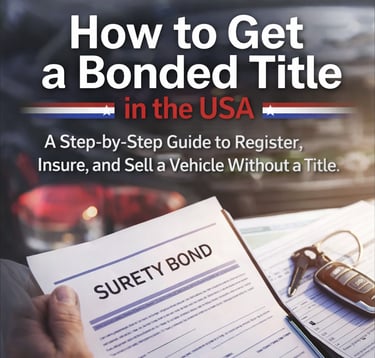
Can a Bonded Title Be Removed Early?
If you’re holding a bonded title and staring at the calendar, counting down the months until it becomes a clean title, you’re not alone. This is one of the most emotionally charged questions vehicle owners ask:
“Can I remove a bonded title early?”
The short answer is: sometimes — but the real answer is far more nuanced, strategic, and dependent on state law, documentation strength, risk exposure, and leverage.
This article goes deep. Very deep.
No fluff. No surface-level explanations. No recycled DMV clichés.
By the time you finish this guide, you’ll understand:
Exactly what a bonded title legally represents
Why most states impose a waiting period
The very limited scenarios where early removal is possible
How to legally accelerate the process (when it can be done)
Why most people fail — and how to avoid costly mistakes
What to do if you’re trying to sell, insure, or refinance a vehicle with a bonded title
How to protect yourself from claims during the bond period
And how to position yourself for the fastest possible conversion to a standard title
Let’s start from the foundation — because misunderstanding this is where most people go wrong.
What a Bonded Title Really Is (Not What the DMV Explains)
A bonded title is not a “temporary title” in the casual sense.
Legally, it is a risk-transfer instrument.
When a state issues a bonded title, it is saying:
“We are allowing this vehicle to be titled and registered without full proof of ownership, but only if a surety bond is posted to protect any prior or unknown owner who may later come forward.”
This matters because it explains everything about the waiting period — and why early removal is rare.
The Three Parties in Every Bonded Title
Every bonded title involves three legal stakeholders:
You (the applicant)
You claim ownership but lack sufficient documentation.The Surety Company
They issue a bond (usually 1.5× to 2× the vehicle’s appraised value).The State / DMV
They act as the regulator and record-keeper.
The bond exists to cover financial damages, not just paperwork issues. If someone later proves they were the rightful owner, the bond pays them — and then the surety comes after you for reimbursement.
This is why states do not casually remove bonded titles early.
Why Bonded Titles Have Waiting Periods (And Why They’re Long)
Most states impose a bond period of 3 to 5 years.
That timeframe is not arbitrary.
It is designed to:
Match or exceed statutes of limitation for ownership claims
Allow time for stolen vehicle reports, liens, or inheritance disputes to surface
Protect buyers, lenders, and insurers downstream
In legal terms, the bond period functions as a cooling-off window for adverse claims.
Typical Bond Periods by State Category
While exact durations vary, states generally fall into these buckets:
3 years – More flexible states, often rural or less litigious
4 years – Transitional jurisdictions
5 years – Strict states with high fraud risk
During this period:
The bonded brand remains on the title
Any valid claim can be filed
The bond remains fully enforceable
This brings us to the core question.https://bondedtitleusa.com/get-bonded-title-usa-ebook
Can a Bonded Title Be Removed Early?
The Honest Answer
In most cases: no.
But there are specific, narrow exceptions where early removal may be possible — and a much larger category where people think it’s possible but it absolutely is not.
Let’s break this down precisely.
Situations Where Early Removal Is NOT Possible (Most Cases)
Before discussing exceptions, it’s critical to eliminate false hope.
A bonded title cannot be removed early simply because:
You’ve owned the vehicle “long enough” (subjectively)
No one has contacted you
The vehicle has passed inspections
You’ve paid taxes and registration fees
The car is insured
The bond has not been claimed
You want to sell the vehicle
A buyer or dealer requests it
A bank wants a clean title
None of these override state law.
The bond period is statutory, not discretionary.
The Only Scenarios Where Early Removal MAY Be Possible
Early removal is not a right. It is an exception process.
And even then, it depends heavily on the state.
Below are the legitimate pathways — not rumors, not DMV counter myths, but real legal mechanisms.
1. You Later Obtain the Missing Ownership Documents
This is the most legitimate path to early removal.
If the bonded title was issued because you lacked:
A signed title
A bill of sale from a prior owner
Lien release documentation
And you later obtain conclusive proof of ownership, some states allow you to apply for title reissuance without the bonded brand.
Examples of Acceptable Documents
Depending on the state, this may include:
The original title, properly endorsed
A notarized bill of sale from the last titled owner
A court order awarding ownership
A lien satisfaction letter from a lender of record
However — and this is critical — the documentation must eliminate the ownership gap that triggered the bond requirement in the first place.
Partial documents are not enough.
2. A Court Order Declaring Ownership
In rare cases, a court judgment can override the bond period.
This usually happens when:
Ownership is contested and litigated
The court issues a declaratory judgment
The DMV is ordered to reissue title
This route is expensive, slow, and risky — but it can work.
Most people underestimate:
Legal costs
Filing complexity
Evidence requirements
The burden of proof
For low-value vehicles, this path rarely makes financial sense.
3. State-Specific Administrative Review (Very Rare)
A handful of states allow discretionary administrative review if:
The bond was issued in error
The DMV misclassified the application
New evidence proves the bond was unnecessary
This is not the same as early removal due to time elapsed.
It’s more accurately described as bond rescission due to procedural error.
These cases are uncommon — but they do exist.
Situations That SOUND Like Early Removal (But Aren’t)
Many people think their bonded title was “removed early” when something else actually happened.
Let’s clear up common misunderstandings.
“The Bond Expired After 3 Years, So It Was Early”
No. That’s normal expiration.
The bond period ended as scheduled.https://bondedtitleusa.com/get-bonded-title-usa-ebook
“The New Title Doesn’t Say ‘Bonded’ Anymore”
Some states issue unbranded titles after conversion — but the waiting period still applied.
The removal was automatic, not early.
“The DMV Clerk Said It Was Fine”
DMV counter advice is not legally binding.
Only written policy, statutes, or official determinations matter.
Why States Resist Early Removal (The Real Reason)
This isn’t bureaucracy for the sake of bureaucracy.
States resist early removal because:
Fraud risk increases dramatically without waiting periods
Vehicle theft cases often surface years later
Heirs and lienholders may not discover losses immediately
Interstate title laundering is a major concern
From the state’s perspective, the bond period protects everyone except the applicant.
That’s why early removal is the exception — not the rule.
What Happens If You Try to Remove It Early Anyway?
If you attempt early removal without a valid basis, one of three things happens:
Immediate denial
Administrative delay (months of back-and-forth)
Red flags on your record (which can complicate future transactions)
Worst case scenario:
You trigger additional scrutiny that makes later conversion harder.
Selling a Vehicle With a Bonded Title During the Bond Period
This is where emotional stakes spike.
Yes, you can sell a vehicle with a bonded title in most states.
But:
Many dealers won’t touch it
Many buyers don’t understand it
Financing options are limited
Trade-in value drops sharply
Some states require:
Disclosure of bonded status
Buyer acknowledgment
Continued bond coverage under the new owner
In some jurisdictions, the bond does not transfer — forcing the buyer to re-bond.
This is why early removal is so desirable — and so rare.
Insurance and Bonded Titles: What You Must Know
Insurance companies generally will insure bonded title vehicles.
However:
Some carriers limit coverage types
Comprehensive and collision may be restricted
Claims investigations can be more aggressive
Importantly:
Insurance coverage does not affect bond duration.
You can insure perfectly for five years — the bonded status remains.
What Actually Happens When the Bond Period Ends
This part is often misunderstood.
When the bond period expires:
The bond liability ends
The surety is released
You may apply for a standard title
In many states, this process is not automatic.
You may need to:
Submit an application
Pay a reissue fee
Provide proof the bond period expired
Request removal of the bonded brand
Failing to do this can leave your title branded longer than necessary.
Strategic Moves to Make During the Bond Period
Even if early removal isn’t possible, you can still optimize your position.
Smart bonded title holders:
Keep impeccable records
Avoid unnecessary title transfers
Maintain insurance continuously
Monitor VIN history reports
Prepare documentation in advance
Why?
Because when the bond period ends, speed matters.
Delays cost money, deals, and leverage.
The Psychological Trap: Waiting Without Preparing
Most people do nothing for 3–5 years.
Then panic when:
A buyer demands a clean title
A dealer refuses a trade-in
A bank won’t finance
Preparation during the bond period is the difference between:
A smooth conversion
A bureaucratic nightmare
Early Removal Myths That Cost People Thousands
Let’s kill these myths permanently:
“If no one claims it in a year, it’s safe” → False
“A notarized bill of sale overrides the bond” → False
“Paying more for a bond shortens the period” → False
“A VIN check guarantees no future claims” → False
“Moving to another state resets the clock” → Extremely false
Interstate title manipulation can create criminal exposure.
When It Does Make Sense to Pursue Early Removal
You should only consider early removal if:
The vehicle has significant value
You have strong missing documentation
The cost of waiting exceeds legal costs
You understand state-specific law
Otherwise, patience is usually the smartest move.
The Single Biggest Mistake People Make
They assume all bonded titles are the same.
They are not.
Differences in:
State statutes
DMV procedures
Bond language
Title branding rules
…mean that advice from one state can be dangerous in another.
This is why generalized internet advice fails so many people.
How Experts Approach Bonded Title Strategy
Professionals don’t ask:
“Can I remove it early?”
They ask:
“What is the fastest legal path to a clean title in this state, with this documentation, and this vehicle value?”
That shift in thinking changes everything.
At this point, you understand the legal framework, the realities, and the rare exceptions — but we’re not done. Next, we’ll go state-by-state, examine real-world case scenarios, break down bond cancellation vs bond expiration, and expose advanced strategies that most DMV clerks won’t even mention — including how to avoid future claims, how surety companies really evaluate risk, and how to structure your documentation so that when the bond period ends, conversion is fast, clean, and painless.
Because the difference between a bonded title nightmare and a smooth exit often comes down to decisions made years before the bond expires — and most people don’t realize that until it’s too late.
And that’s exactly where things start to get interesting, because once you understand how states, sureties, and DMVs actually think, you can begin to position yourself not just to survive the bond period — but to win it, leverage it, and exit it with maximum value, minimal stress, and no surprises waiting for you when you least expect them.
Which brings us to the next critical question — one that almost no one asks early enough:
What happens inside the surety company during the bond period, how claims are really evaluated, and why the absence of a claim does not mean you’re automatically safe…
continue
…from future exposure.
What Happens Inside the Surety Company During the Bond Period
This is one of the most misunderstood — and most important — parts of the bonded title process.
Most vehicle owners assume the surety company is passive. They imagine the bond just “sits there” for three to five years, unused, forgotten, dormant.
That assumption is dangerously wrong.
A Surety Bond Is Not Insurance
First, a critical distinction.
A surety bond is not insurance in the traditional sense.
Insurance transfers risk away from you
A surety bond guarantees your obligation
If a claim is paid, you are legally required to reimburse the surety.https://bondedtitleusa.com/get-bonded-title-usa-ebook
From the surety’s perspective:
You are the principal
The state is the obligee
The bond protects third parties
That means the surety’s goal is risk containment, not generosity.
How Surety Companies Monitor Bonded Titles (Yes, They Do)
Even if you never hear from them, sureties actively manage risk during the bond period.
They monitor:
VIN databases
Theft reports
Salvage and rebuild records
Title activity across states
Claim patterns by geography
They also track:
You
Your history
Prior bond activity
Any legal disputes tied to the VIN
This is why attempting shady shortcuts — like retitling in another state — can backfire years later.
Why “No Claim Yet” Does NOT Mean You’re Safe
This is one of the biggest psychological traps bonded title holders fall into.
They think:
“It’s been 18 months. No one has claimed it. I’m in the clear.”
Legally? You are not.
Here’s why:
Ownership disputes often surface late
Heirs may discover assets years later
Liens can be revived retroactively
Stolen vehicle databases are updated constantly
Insurance subrogation claims take time
The bond period exists specifically to allow these delayed claims notice.
What Triggers a Bond Claim (And What Does Not)
Let’s be precise.
A bond claim is not triggered by:
A buyer complaining
A DMV clerk raising a question
A dealership refusing a trade
A VIN check flagging inconsistencies
A bond claim is triggered when:
A claimant provides evidence of prior ownership
A lienholder proves an unsatisfied lien
A court judgment establishes superior title
A government entity asserts ownership interest
The evidentiary bar is high — but not unreachable.
What Happens If a Claim Is Filed
If a claim is filed during the bond period, the process typically unfolds like this:
Notice of claim is sent to the surety
The surety notifies you
Evidence is requested from both sides
An investigation is opened
Legal review occurs
A determination is made
If the claim is valid:
The surety pays the claimant (up to bond value)
The surety pursues you for reimbursement
Your bonded title will not convert
Additional legal consequences may follow
This is why bonded titles are not “cheap shortcuts.”
They are calculated legal compromises.
Bond Cancellation vs Bond Expiration: A Critical Distinction
Many people confuse these two concepts.
They are not the same.
Bond Expiration (Normal, Desired)
Occurs after statutory period
No claims were filed
Bond obligation ends
You may apply for a standard title
This is what most people want.
Bond Cancellation (Risky, Often Bad)
Bond cancellation can occur if:
The bond was issued in error
The applicant committed fraud
The surety withdraws due to misrepresentation
A claim forces termination
Cancellation does not equal early clean title.
In fact, cancellation often results in:
Title revocation
Registration suspension
Requirement to re-bond
DMV enforcement actions
Early removal through cancellation is almost never beneficial.
Why States Don’t “Reward” Time Served
Another common misconception:
“I’ve had the bonded title for two years with no issues. Surely that counts for something.”
Legally, it does not.
Bond periods are binary:
Either completed
Or not completed
There is no partial credit system.
The state is not evaluating your behavior.
It is waiting out legal exposure.
State-by-State Reality: Why Answers Differ So Much
Now we reach one of the most frustrating aspects of bonded titles.
Two people can ask the same question and receive completely different answers — and both answers can be correct.
Why?
Because bonded title law is state-specific, not federal.
Key Variables That Change by State
Bond duration
Bond multiplier (vehicle value × factor)
Eligible vehicles
Required documentation
Early removal provisions
Branding language
Conversion procedure
Some states:
Automatically remove the bonded brand
Require formal application
Require proof the bond period expired
Require new VIN inspection
This is why “my cousin did it in Texas” is meaningless advice if you’re in Georgia, Florida, or California.
States That Are Most Flexible (And Why)
A small subset of states show more flexibility — usually because:
Vehicle values are lower
Fraud rates are lower
Rural ownership transfers are common
Administrative discretion is broader
Even in these states, early removal is still exceptional, not routine.
States That Are Strict (And Why)
Other states are extremely rigid because:
High vehicle theft rates
Large used-car markets
Complex lien environments
History of title fraud
In these states:
Bond periods are long
DMV discretion is minimal
Appeals are rare
Documentation standards are unforgiving
Attempting early removal here is often a waste of time and money.
The Role of VIN History Reports (Carfax, NMVTIS, Etc.)
VIN reports are useful — but dangerous if misunderstood.
They can:
Reveal salvage branding
Show theft reports
Indicate title gaps
Flag odometer inconsistencies
They cannot:
Guarantee ownership
Replace missing titles
Override bond periods
Prevent future claims
States do not treat VIN reports as conclusive proof.
They are supporting evidence only.
How Bonded Titles Affect Vehicle Value (The Real Numbers)
Let’s talk about money — because this is where bonded titles hurt the most.
On average:
Private sale value drops 20%–40%
Dealer trade-in value drops 30%–60%
Financing options drop to near zero
Why?
Because risk is priced in.
A buyer doesn’t care that you feel confident.
They care that:
The title is branded
The bond period isn’t over
They may inherit liability
Even after conversion, some buyers remain cautious.
Why Early Removal Is So Attractive (And So Rare)
From a purely economic standpoint, early removal makes sense.
If you could:
Remove the bond early
Convert to a clean title
Restore full market value
…you would.
But the system is designed to prevent exactly that shortcut — because shortcuts invite abuse.
What You Can Do to Reduce Risk During the Bond Period
While you usually can’t shorten the bond period, you can reduce exposure.
1. Maintain Continuous Insurance
Gaps in coverage raise red flags.
They can:
Complicate future claims
Raise questions during conversion
Trigger additional scrutiny
2. Avoid Title Transfers
Every transfer:
Reopens scrutiny
Increases paperwork
Raises fraud risk
If possible, keep the vehicle titled in the same name until conversion.
3. Document Everything
Keep:
Bills of sale
VIN inspections
Appraisals
Bond paperwork
DMV receipts
Insurance records
When the bond period ends, this file becomes your leverage.
4. Monitor the VIN Annually
Check:
Theft databases
Lien records
NMVTIS reports
Early detection beats late surprises.
The Worst-Case Scenario: A Claim Filed Late in the Bond Period
This is rare — but devastating when it happens.
Imagine:
Year 4 of a 5-year bond
You’re planning to sell
A claimant surfaces
If the claim is valid:
The bond pays
You reimburse
The title does not convert
Your resale plans collapse
This is why bonded titles require emotional patience.
Why Dealers Hate Bonded Titles (Even Legal Ones)
Dealers operate on speed and certainty.
Bonded titles offer neither.
They:
Slow inventory turnover
Complicate financing
Scare lenders
Increase legal review
Even if legal, they are commercial poison for many dealers.
Should You Ever Buy a Vehicle With a Bonded Title?
Sometimes — but only if:
The price reflects the risk
You plan to keep it long-term
You understand the bond period
You can tolerate uncertainty
Buying one to flip is almost always a mistake.
The Exit Strategy: Planning for Conversion From Day One
Smart bonded title holders think about conversion on day one, not year five.
They:
Know the exact bond end date
Know the reissue process
Know the fees
Know the required forms
Know the timeline
They don’t guess.
They don’t rely on memory.
They prepare.
The DMV Won’t Remind You
Here’s a brutal truth:
In many states, the DMV does not notify you when the bond period ends.
If you don’t apply:
The bonded brand stays
Buyers keep hesitating
Value stays depressed
The system assumes you are responsible.
What Happens If You Miss the Conversion Window?
In some states:
You can apply years later with no penalty
In others:
You may need to resubmit documentation
Pay additional fees
Re-verify VINs
Procrastination costs money.
The Emotional Side No One Talks About
Bonded titles create a constant low-level anxiety.
Every time you:
Think about selling
Visit a dealership
Apply for insurance changes
Check vehicle value
…you’re reminded the title isn’t “clean.”
That psychological tax matters.
Why People Search “Can a Bonded Title Be Removed Early?”
Because they want certainty.
They want:
Control
Liquidity
Peace of mind
And the system offers none of those quickly.
But here’s the part most articles never say:
There is a right way and a wrong way to navigate this.
The wrong way is hope, rumors, and shortcuts.
The right way is knowledge, preparation, and strategy.
This Is Where Most Online Advice Fails
Most articles:
Are too short
Are too vague
Ignore state differences
Overpromise exceptions
Underestimate risk
They leave readers confused and exposed.
What Professionals Do Differently
Professionals:
Read statutes, not forums
Understand surety dynamics
Plan multi-year timelines
Avoid risky transfers
Prepare exit documentation early
They don’t ask:
“Can I cheat the system?”
They ask:
“How do I navigate the system with maximum leverage and minimum risk?”
The Single Most Important Insight
If you remember only one thing from this article, remember this:
Early removal of a bonded title is rare not because states are cruel — but because ownership risk unfolds slowly.
The bond period exists to absorb that risk.
You can’t rush time — but you can outsmart uncertainty.
If You’re Still Reading, You’re Already Ahead
Most people stop at surface-level answers.
You didn’t.
That alone puts you in a better position than 90% of bonded title holders.
The Final Question You Must Answer Honestly
Ask yourself:
Do I understand my state’s exact bond rules?
Do I know my bond end date?
Do I have my documentation organized?
Do I know the conversion process?
Do I know what not to do?
If any answer is “no,” you’re exposed.
Your Next Move Matters More Than You Think
Bonded titles are not inherently bad.
They are tools.
Used correctly:
They restore mobility
They legitimize ownership
They solve documentation gaps
Used poorly:
They destroy value
They create stress
They cause legal headaches
The Smartest Way Forward
If you want to:
Avoid mistakes
Understand state-specific rules
Know exactly when early removal is impossible — and when it might be
Prepare for clean title conversion the right way
Then you need more than generic advice.
You need a clear, step-by-step, state-aware roadmap built for real people dealing with real bonded titles — not theoretical examples.
👉 Get the Bonded Title USA Ebook
This is not a blog post.
It’s a practical playbook that walks you through:
Bonded title rules by state
Documentation strategies that actually work
Mistakes that cost people thousands
How to protect yourself during the bond period
How to exit cleanly, quickly, and legally
If you’re holding a bonded title — or thinking about getting one — this knowledge pays for itself many times over.
Don’t guess. Don’t wait. Don’t gamble.
👉 Get the Bonded Title USA Ebook and take control of your situation today.
Because when the bond period ends — or when a claim appears — the people who prepared are the ones who sleep at night.
continue
…and the ones who didn’t are the ones frantically searching forums at 2 a.m., hoping someone else has already made the same mistake and survived it.
Now let’s go even deeper — into the edge cases, gray zones, and advanced tactics that almost no general article ever covers, but which absolutely matter if you’re trying to understand whether a bonded title can be removed early in practice, not just in theory.
The Gray Zone: When “Early Removal” Is Technically Not Removal
Here’s something subtle but extremely important.
In some situations, people believe their bonded title was removed early, when in reality the bond obligation still existed, but the title branding changed.
This distinction matters more than most people realize.
Branding vs Legal Status
A title can:
Appear “clean” to a casual reader
Still be legally bound to a bond obligation
Still be subject to claims
Some states:
Do not print “BONDED” prominently
Use internal flags
Store bond data electronically
This creates dangerous false confidence.
A buyer may believe the vehicle has a clean title — until a claim surfaces.
And when that happens, the legal analysis goes back to bond issuance date, not what the paper looks like.
Why Some Clerks Say “Yes” When the Law Says “No”
Another reality you need to understand: DMV clerks are not lawyers.
They:
Follow scripts
Use checklists
Rely on internal guidance
Rotate roles frequently
Many bonded title questions fall outside routine transactions.
So when someone asks:
“Can I remove this early?”
The clerk may answer based on:
Anecdotes
Incomplete training
Misunderstood exceptions
This is how myths are born.
A verbal “yes” at a counter does not override statute.
The Documentation Threshold That Changes Everything
Let’s talk about the single factor that most affects early removal eligibility:
Documentation completeness.
If you want any chance — however small — of early removal, your documentation must:
Close the ownership gap
Be verifiable
Be traceable
Be legally sufficient
Partial proof doesn’t count.
Examples of Documentation That Still Fails
These often feel strong — but aren’t:
Handwritten bills of sale without prior title reference
Notarized statements from non-titled sellers
Affidavits without corroborating evidence
VIN checks showing “no issues”
Long-term possession without paper trail
Possession is not ownership.
Time is not proof.
Silence is not consent.
The Statute of Limitations Myth
One of the most persistent myths around bonded titles is this:
“After X years, no one can claim it anyway.”
This misunderstands how statutes of limitation work.
The clock often starts when:
A party discovers the loss
A lienholder becomes aware
A theft is reported
An estate is probated
Not when you bonded the title.
This is why states bake long bond periods into the process — they’re aligning with worst-case legal timelines, not best-case assumptions.
Why Moving the Vehicle to Another State Can Make Things Worse
Some people think they’ve found a loophole:
“If I move to another state, maybe I can retitle it clean.”
This is one of the fastest ways to create a legal nightmare.
Here’s why:
States share title data
Bonded status often follows the VIN
NMVTIS flags inconsistencies
Title washing is a known fraud vector
Instead of shortening the process, you may:
Trigger audits
Get denied outright
Be required to re-bond
Face allegations of misrepresentation
What looked like a shortcut becomes a trap.
The Surety’s Quiet Power
Here’s something few people realize:
Even if the DMV wanted to remove the bonded status early, the surety’s position matters.
Why?
Because the bond is a contract.
And unless:
The bond is legally released
The obligation is extinguished
The surety consents
…the risk still exists.
Sureties are conservative by nature.
They do not voluntarily shorten exposure unless:
Risk is eliminated
Documentation is airtight
Law explicitly allows it
Which brings us back to reality: early removal is rare because no party benefits except the applicant.
When Early Removal Actually Backfires
Yes — sometimes people succeed in changing title status early, only to regret it later.
How?
A later claim surfaces
The bond was prematurely released
Liability shifts in unexpected ways
Insurance disputes arise
In extreme cases, early administrative errors have led to:
Title revocation years later
Forced restitution
Civil litigation
Ironically, the waiting period exists to prevent exactly this kind of delayed chaos.
The Financial Math Most People Get Wrong
Let’s do a hard calculation.
Assume:
Vehicle value: $12,000
Bond period: 3 years
Depreciation over 3 years: $3,000
Many people panic and think:
“I’m losing money every month this stays bonded.”
But compare that to:
Legal fees to pursue early removal: $3,000–$7,000
Time lost
Risk of denial
Stress and uncertainty
For most vehicles, the math favors patience.
Early removal only makes sense when:
Vehicle value is high
Opportunity cost is extreme
Documentation is unusually strong
The Emotional Cost of Fighting the System
People underestimate this part.
Trying to force early removal often means:
Repeated DMV visits
Contradictory answers
Paperwork resubmissions
Waiting weeks for responses
Hitting dead ends
That emotional drain leads many to make worse decisions — like selling at a loss or attempting risky workarounds.
Why “Waiting It Out” Is Often the Smart Play
This is not what people want to hear — but it’s the truth.
If:
You can legally use the vehicle
You don’t need immediate resale
You’re insured
You’re compliant
Then waiting is often the lowest-risk strategy.
The key is not passive waiting.
It’s active preparation.
What Active Preparation Actually Looks Like
Active preparation means:
Creating a conversion checklist
Tracking the exact bond expiration date
Pre-filling conversion forms
Knowing which office handles reissuance
Budgeting for fees
Keeping records organized
So when the bond period ends, you’re not starting — you’re finishing.
The Day the Bond Period Ends: What to Expect
This is another moment people get wrong.
The bond does not magically disappear at midnight.
In many states:
You must initiate conversion
The DMV must process it
There may be delays
Additional verification may be required
If you’re prepared, this is smooth.
If you’re not, it becomes another waiting game.
Why Some People Think Their Bond “Ended Early”
Sometimes, people stop receiving correspondence from the surety and assume the bond ended.
That’s dangerous.
Silence does not equal termination.
Only:
Written confirmation
Official DMV reissuance
Clear statutory expiration
…ends the obligation.
The Long View: Bonded Titles as a Temporary Phase
The healthiest way to think about a bonded title is this:
It’s a temporary legal phase, not a permanent defect.
But like any temporary phase, how you behave during it determines the outcome.
People who:
Respect the process
Avoid shortcuts
Stay informed
…almost always exit cleanly.
Those who fight the system blindly often create lasting problems.
The One Question You Should Ask Before Doing Anything Else
Before calling the DMV.
Before hiring a lawyer.
Before attempting early removal.
Ask yourself:
“What exact ownership gap caused this bond to exist?”
If you can’t answer that clearly, you’re not ready to pursue early removal — or even plan effectively.
That answer determines:
Your risk
Your options
Your timeline
Why This Topic Is So Poorly Explained Online
Most content:
Is written for clicks
Avoids nuance
Overpromises exceptions
Undersells risk
But bonded titles live at the intersection of:
Property law
Administrative law
Contract law
Risk management
That complexity doesn’t compress into 800 words.
If You’re Still Hoping for a Magic Trick
There isn’t one.
No loophole.
No secret DMV form.
No guaranteed workaround.
There is only:
Law
Documentation
Time
Strategy
The People Who Regret Bonded Titles vs the Ones Who Don’t
The difference isn’t luck.
It’s understanding.
People who regret bonded titles:
Didn’t research
Trusted rumors
Rushed decisions
Ignored risk
People who don’t:
Planned ahead
Knew the rules
Accepted the timeline
Protected themselves
This Is the Real Answer to “Can a Bonded Title Be Removed Early?”
Here it is — stripped of hope, fear, and hype:
Usually no. Occasionally yes. Never casually.
And when it is possible, it’s because the bond was never truly needed — not because time passed faster.
The Cost of Getting This Wrong Is Real
Mistakes with bonded titles don’t just cost money.
They cost:
Time
Opportunity
Peace of mind
And those costs compound quietly.
Your Final Decision Point
You have two options:
Guess, hope, and react later
Learn, plan, and control the outcome
Only one of those leads to predictable results.
This Is Why the Right Information Changes Everything
If you’ve read this far, you already know more than most.
But knowing concepts isn’t the same as having a step-by-step roadmap tailored to real-world DMV behavior, real statutes, and real scenarios.
That’s where most people still get stuck.
👉 Get the Bonded Title USA Ebook
If you want:
Clear answers instead of guesses
State-specific guidance
Practical checklists
Mistake prevention
A clean exit strategy
Then don’t rely on scattered advice.
👉 Get the Bonded Title USA Ebook and give yourself certainty in a process designed to test patience.
Because bonded titles don’t punish ignorance — they exploit it.
And the smartest move you can make is understanding the system before it forces you to learn the hard way…
BondedTitleUSA.com is an informational resource and does not provide legal advice. DMV rules vary by state.
Contact
infoebookusa@aol.com
© 2026. All rights reserved.