Can’t Register Your Car Because of a Missing Title?
Blog post description.
1/31/202617 min read
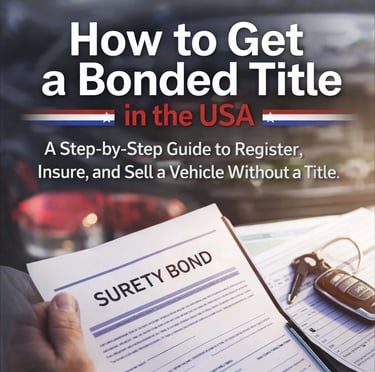
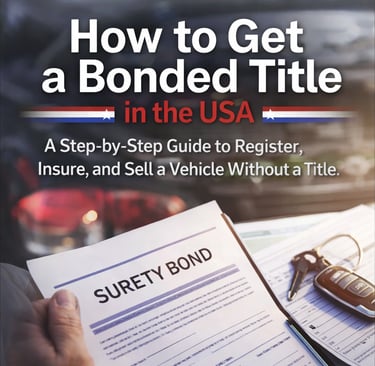
Can’t Register Your Car Because of a Missing Title? Here’s Exactly What to Do (and How to Finally Get Your Car on the Road)
You finally did it. You bought the car. Maybe it was a private sale. Maybe it was a barn find, a Facebook Marketplace deal, an estate vehicle, an abandoned project, or a car you inherited from a relative who swore the paperwork was “somewhere.” You go to the DMV confident, hopeful, ready to walk out with plates and registration.
And then it happens.
“We can’t register this vehicle. There’s no valid title.” https://bondedtitleusa.com/get-bonded-title-usa-ebook
No plates. No registration. No legal driving. Just confusion, frustration, and a sinking feeling in your stomach.
If this is you, take a breath. You are not alone. And more importantly: this problem is solvable—even if the DMV made it sound like a dead end.
This guide exists for one reason: to walk you step by step through exactly what to do when you can’t register your car because of a missing title, using clear, authoritative, real-world instructions that actually work in the United States.
No fluff. No vague advice. No “just call the DMV again” nonsense.
Let’s get into it.
Why the DMV Refuses to Register a Car Without a Title
Before we talk solutions, you need to understand the logic behind the problem—because once you do, the path forward becomes much clearer.
In the U.S., a vehicle title is legal proof of ownership. To the DMV, no title means:
Ownership is not proven
The vehicle could be stolen
There may be unpaid liens
The seller may not have had the right to sell it
The state cannot legally issue registration or plates
From the DMV’s perspective, registration is secondary. Ownership comes first.
So when you show up with:
A bill of sale only
A handwritten receipt
A verbal explanation
A story about a lost title
…it doesn’t matter how honest or reasonable you are. Without proper ownership documentation, the DMV’s hands are tied.
But here’s the key insight most people miss:
“No title” does not mean “no options.”
It simply means you must use alternative legal ownership pathways.
Common Situations Where People End Up Without a Title
Let’s get specific. Missing titles don’t happen randomly. They happen in very predictable scenarios. If one of these sounds familiar, you’re in exactly the right place.
Private Party Sale Gone Wrong
You bought a used car from an individual, not a dealer. They promised to send the title later. They disappeared. Or they handed you a title that was:
Never signed
Signed incorrectly
In someone else’s name
Too damaged to be accepted
This is the most common scenario by far. https://bondedtitleusa.com/get-bonded-title-usa-ebook
Abandoned or Storage-Lien Vehicles
You acquired a vehicle that was abandoned on your property, towed, or left unpaid at a repair shop. You legally possess the car—but you don’t have a title.
Inherited Vehicles
A family member passed away, and the car was never properly transferred. The title is missing, outdated, or locked in probate limbo.
Project Cars, Barn Finds, or Old Vehicles
You bought an older car that hasn’t been registered in decades. The title was lost long ago, or the last owner is deceased.
Vehicles Purchased at Auction
Some auction vehicles are sold without titles, especially salvage, impound, or lien-sale cars.
Vehicles Moved Across State Lines
A title exists—but not in your state, and it’s not transferable without additional steps.
If any of this describes your situation, you are dealing with a title defect, not an impossible problem.
The Dangerous Myth: “You’re Just Stuck”
One of the most damaging things people hear is:
“There’s nothing you can do without a title.”
That statement is flat-out wrong.
What’s true is this:
You can’t register a car without proving ownership—but there are multiple legal ways to prove ownership without an existing title.
The problem is that most DMV clerks won’t explain these pathways unless you already know what to ask for.
That’s why people get stuck.
Let’s change that.
Your Legal Options When a Car Has No Title
There are five primary legal paths to resolving a missing title issue in the U.S. Not all apply to every situation—but at least one usually does.
We’ll break each down in detail.
Applying for a Bonded Title
Requesting a Duplicate Title (if eligible)
Using a Court-Ordered Title
Filing for Abandoned Vehicle Ownership
Title recovery through Lien or Auction Procedures
The most powerful—and most misunderstood—option is the first one.
The Bonded Title: The Most Reliable Solution in Most States
If you take nothing else from this article, take this:
A bonded title is the single most effective way to register a vehicle when the original title is missing.
What Is a Bonded Title?
A bonded title is a state-issued vehicle title backed by a surety bond. It allows you to register and legally drive the car even when prior ownership documents are incomplete or unavailable.
Here’s what it does in plain English:
The state gives you a title
A bond protects any previous owner or lienholder
You get registration, plates, and legal ownership
After a set period (usually 3–5 years), the bond expires
The title becomes permanent
No chasing old owners. No impossible paperwork. No legal guesswork.
Why States Allow Bonded Titles
States understand reality. Titles get lost. People move. Owners die. Paperwork disappears.
Rather than permanently locking vehicles out of the system, states use bonded titles to manage risk, not block ownership.
The bond exists to protect anyone who might later claim the vehicle. If no one does (which is overwhelmingly common), you’re in the clear.
When a Bonded Title Is the Right Choice
A bonded title is usually the correct solution if:
You bought a car but never received a valid title
The title was lost and the seller is unavailable
The vehicle has no active liens (or liens cannot be verified)
The car is not reported stolen
The vehicle value falls within state limits
Most people who can’t register a car due to a missing title qualify for this option—even if the DMV never mentioned it.
The Emotional Reality: Why This Situation Feels So Stressful
Let’s pause for a moment.
This isn’t just paperwork. For many people, this situation feels:
Embarrassing (“I should’ve known better”)
Stressful (“I already paid for this car”)
Urgent (“I need to drive to work”)
Scary (“What if I lose the car entirely?”)
The uncertainty is often worse than the problem itself.
Here’s the truth you need to hear:
You didn’t mess up beyond repair. You didn’t lose your money. You didn’t buy a useless car.
You simply entered a process that no one explains clearly.
Once you understand the steps, this becomes a procedural problem, not a crisis.
Step-by-Step: How the Bonded Title Process Works
Let’s walk through this slowly and clearly.
Step 1: Confirm the Vehicle Is Eligible
Before anything else, the vehicle must:
Have a clean VIN (not stolen)
Not have an unreleased lien (or lien must be resolved)
Be physically in your possession
Be eligible for registration in your state
This is usually verified through a VIN check or DMV inquiry.
Step 2: Get the Vehicle Appraised (or Valued)
The bond amount is based on vehicle value, usually:
1.5× the appraised value (some states use 2×)
Example:
Car value: $6,000
Bond amount: $9,000
This does not mean you pay $9,000.
It means the bond coverage is $9,000.
Step 3: Purchase a Surety Bond
You buy a bonded title surety bond from an authorized provider.
Typical cost:
$100–$300 for most vehicles
Yes—hundreds, not thousands.
Step 4: Submit Bonded Title Application to the DMV
This includes:
Bond certificate
Application forms
Bill of sale or ownership affidavit
VIN verification
Fees
Step 5: Receive Title, Register the Vehicle, Get Plates
Once approved:
The state issues a bonded title
You can register the car
You get plates and can drive legally
From the outside, it looks exactly like a normal title—except it’s marked as bonded.
Real Example: Private Sale Without a Title
Let’s make this concrete.
Scenario:
You buy a 2014 Honda Accord from a private seller for $5,500. They promise to mail the title. They never do. Phone disconnected.
What most people think:
“I’m screwed.”
What actually happens:
VIN check: clean
Appraised value: $5,000
Bond amount: $7,500
Bond cost: ~$120
DMV filing: approved
You walk out with registration and plates.
The car is legally yours. https://bondedtitleusa.com/get-bonded-title-usa-ebook
Why the DMV Often Doesn’t Explain This
This frustrates people—and understandably so.
DMV clerks are trained to:
Process standard transactions
Reject incomplete documentation
They are not trained to act as legal advisors.
If you say:
“I don’t have a title”
They respond:
“We can’t register this vehicle.”
If instead you say:
“I want to apply for a bonded title due to a missing title”
You are speaking their language.
That single sentence often changes everything.
Duplicate Titles: When This Option Works (and When It Doesn’t)
Another possible path is requesting a duplicate title—but this only works in very specific cases.
You Can Get a Duplicate Title If:
You are the last titled owner
The title was issued in your name
The title was lost, stolen, or damaged
You Cannot Get a Duplicate Title If:
The title was never in your name
The seller never transferred ownership
The previous owner is deceased
There are unresolved liens
Many people waste months chasing duplicate titles they are not legally entitled to request.
If you were never the titled owner, this path is usually closed.
Court-Ordered Titles: Powerful but Slow
Some states allow you to petition a court to issue a title.
This involves:
Filing a legal action
Providing evidence of ownership
Attending a hearing
Waiting weeks or months
It can work—but it’s time-consuming, intimidating, and often unnecessary when a bonded title would accomplish the same result faster.
Court-ordered titles are typically used when:
Ownership is actively disputed
High-value vehicles are involved
Other methods are unavailable
For most everyday vehicles, this is overkill.
Abandoned Vehicle and Lien Procedures
If the car was:
Left on your property
Towed
Stored unpaid at a shop
Some states allow ownership through abandonment or lien processes.
These require:
Certified notices to prior owners
Public postings
Waiting periods
Auctions or affidavits
They can work—but they are highly procedural and easy to mess up.
One missed notice or deadline can invalidate the entire process.
Why People Lose Months (or Years) on This Problem
Here’s what typically goes wrong:
They keep going back to the DMV hoping for a different answer
They chase sellers who have vanished
They assume the problem is unsolvable
They Google random advice that doesn’t apply to their state
They start, stop, and restart the process multiple times
All of this burns time, money, and emotional energy.
The reality is:
Once you choose the correct legal pathway, the process becomes linear and predictable.
The Hidden Cost of Waiting
Let’s talk honestly.
Every month this drags on costs you:
Insurance you can’t fully use
Storage or parking costs
Missed work opportunities
Stress and uncertainty
Depreciation on a car you can’t drive
People often delay action because they’re afraid of doing it wrong.
Ironically, delay is usually the most expensive choice.
State Differences: Why Guidance Must Be Precise
Every state handles titles slightly differently:
Bond duration varies
Forms differ
Fees differ
Eligibility rules vary
That’s why generic advice fails.
What works in Texas might not work in Florida. What’s accepted in California may be rejected in New York.
Understanding your state’s exact bonded title process is critical.
This Is Where Most Guides Stop—But We’re Not Stopping
Most articles end here with:
“Check with your local DMV.”
That’s useless.
In the next sections, we’re going to dive deeper into:
How to avoid bond application rejection
How to handle VIN problems
What to do if a lien appears
How bonded titles convert to clean titles
Common mistakes that delay approval
What to say—and not say—at the DMV
How to protect yourself legally during the bond period
And yes—we will continue without summarizing, without shortening, and without stopping early.
Because if you’re dealing with a missing title, you deserve certainty, not half-answers.
We’re just getting started…
continue
…and that certainty comes from understanding exactly how to navigate the traps that derail most bonded title applications.
Let’s go deeper—because this is where people who “almost qualify” end up wasting weeks, while others walk out registered and legal.
The Most Common Reasons Bonded Title Applications Get Rejected
Here’s something most people never realize until it’s too late:
Bonded title rejections are rarely about eligibility. They’re about execution.
In other words, people qualify—but they submit the wrong thing, the wrong way, or say the wrong words at the wrong time.
Let’s eliminate that risk.
Mistake #1: Submitting an Incomplete Ownership Story
Every bonded title application is, at its core, a narrative.
The state is asking:
How did you acquire this vehicle?
Why is the title missing?
Why should the state believe you are the rightful owner?
If your explanation is vague, contradictory, or incomplete, the application stalls.
Bad explanation:
“The seller didn’t give me the title.”
Strong explanation:
“I purchased the vehicle via a private-party sale on [date]. The seller stated the title was lost and agreed to provide it later. Despite multiple attempts, I have been unable to obtain the original title. I am requesting a bonded title to establish legal ownership.”
Clear. Factual. Calm. Non-accusatory.
States respond to clarity.
Mistake #2: Not Verifying the VIN Early
A bonded title cannot override a stolen vehicle record.
Before spending money on bonds or applications, you must confirm:
The VIN is valid
The VIN is not reported stolen
The VIN matches the vehicle exactly
One incorrect digit can derail everything.
If there’s a mismatch between:
The VIN plate
The engine bay stamp
The door jamb
The bill of sale
…the DMV may flag the vehicle.
Always do VIN verification first, not last.
Mistake #3: Ignoring Old or Unknown Liens
This one is huge.
If the state database shows a lien—even an ancient one—the bonded title process may pause until it’s addressed.
Here’s what people assume:
“The lien is old, so it probably doesn’t matter.”
Here’s the reality:
Any lien on record matters until it is officially released.
Sometimes the lienholder no longer exists. Sometimes the bank merged. Sometimes records are incomplete.
This does not mean you’re stuck—but it does mean additional steps may be required.
In many states, if:
The lienholder cannot be located
No one claims the vehicle during the bond period
…the bonded title still proceeds.
But you must acknowledge the lien honestly. Never hide it. https://bondedtitleusa.com/get-bonded-title-usa-ebook
Mistake #4: Over- or Under-Valuing the Vehicle
Bond amounts are tied to vehicle value.
If you:
Inflate the value → unnecessary bond cost
Understate the value → application rejection
Use realistic, defensible valuation methods:
State-approved appraisal forms
Dealer valuation statements
Accepted market guides (as permitted)
The goal is not to “game” the system. It’s to align with it.
What the Bond Period Really Means (And Why It’s Less Scary Than It Sounds)
People hear “bonded title” and panic.
They imagine:
Lawsuits
Repossession
Surprise claims years later
Let’s strip away the fear and talk reality.
What the Bond Actually Covers
The surety bond exists to protect:
A prior legal owner
A lienholder
The state
If someone proves they legally owned the vehicle before you, the bond compensates them—not you personally.
What Happens to You During the Bond Period?
You:
Drive the car legally
Insure it
Register it
Sell it (with disclosure)
Use it like any other titled vehicle
You are not on probation. You are not restricted from use.
How Often Are Claims Made?
Rarely.
In the vast majority of cases:
No one files a claim
The bond expires
The title becomes clean
Most people never hear another word about it.
What If Someone Does File a Claim?
Let’s address the fear directly.
If a claim is filed:
The claimant must prove ownership
The surety investigates
Fraud or false claims are rejected
If a claim is valid:
The bond pays the claimant
The state determines next steps
This does not automatically mean you lose the car. Each case is handled individually.
And again—this scenario is uncommon.
Selling a Vehicle With a Bonded Title
Yes—you can sell a bonded-title vehicle.
But transparency matters.
Best Practices When Selling
Disclose the bonded status in writing
Provide the buyer with documentation
Price accordingly (often slightly below market)
Many buyers are comfortable purchasing bonded-title vehicles—especially when the bond period is already partially complete.
After bond expiration, the title converts to a standard title in most states, and this concern disappears entirely.
How Bonded Titles Convert to Clean Titles
This is one of the most misunderstood parts of the process.
Here’s how it usually works:
Bond period begins (commonly 3–5 years)
No valid claims are made
Bond expires automatically
You apply for title conversion (or it converts automatically, depending on state)
“Bonded” designation is removed
At that point, your title is functionally indistinguishable from any other clean title.
No stigma. No flags. No extra steps for future transfers.
What to Say (and NOT Say) at the DMV
This matters more than people think.
DMV interactions are procedural. The words you use signal whether you understand the process.
Say This:
“I’m applying for a bonded title due to a missing title.”
“I have documentation showing how I acquired the vehicle.”
“The VIN has been verified.”
“I understand the bond requirements.”
Avoid Saying This:
“I don’t know what to do.”
“The seller ghosted me.”
“Can you just register it anyway?”
“It’s probably fine.”
Confidence doesn’t mean arrogance. It means clarity.
When clerks see you’ve done your homework, the interaction changes.
What If the DMV Gives You Conflicting Information?
This happens constantly.
One clerk says:
“You can’t do that.”
Another says:
“That’s fine.”
This isn’t corruption. It’s human variance.
Here’s how to handle it:
Ask for written requirements
Reference official state forms
Request a supervisor politely if needed
Return on another day if necessary
Persistence + accuracy beats frustration every time.
The Financial Reality: Why This Is Cheaper Than You Think
Many people delay action because they assume this will cost thousands.
Let’s break typical costs down realistically:
Surety bond: $100–$300
DMV fees: $50–$200 (varies)
VIN verification: minimal or free
Appraisal: often free or low-cost
Compare that to:
Buying another vehicle
Letting the car sit unused
Paying storage or towing fees
The bonded title route is often the cheapest path forward, not the most expensive.
The Psychological Trap: “I’ll Deal With It Later”
This is where cars die in driveways.
People think:
“I’ll handle it when I have time.”
Weeks turn into months. Months turn into years. The car degrades. The problem feels bigger.
Here’s the truth:
This problem does not get easier with time. But it does get easier with information.
Once you understand the process, the fear evaporates—and action becomes obvious.
Special Cases: Older Vehicles, Classic Cars, and Project Builds
If your vehicle is:
Older than a certain year (varies by state)
A classic or antique
Off the road for decades
Some states offer simplified processes.
Others still require bonded titles.
The mistake people make is assuming:
“Old cars don’t need titles.”
That is state-specific and often misunderstood.
Always verify before assuming exemption.
Why Online Advice Is Often Wrong (or Dangerous)
You’ll see forums say:
“Just register it in another state.”
“Use a title service.”
“Swap VIN plates.”
“Nobody checks.”
Let’s be clear.
Some of this advice is:
Illegal
Fraudulent
Extremely risky
What works “for a guy online” can permanently block your vehicle from legal registration if done incorrectly.
Bonded titles exist precisely so you don’t have to cut corners.
The Moment Everything Changes
There is a moment in this process when people realize:
“This isn’t a nightmare. It’s just a checklist.”
That moment is when stress drops—and momentum begins.
From there:
Forms get filled
Bonds get purchased
Plates get issued
Cars get driven
And life moves forward again.
You Don’t Need to Guess. You Need a Playbook.
Here’s the uncomfortable truth:
Most people fail at this not because it’s impossible—but because they try to piece it together from fragments.
Different state rules. Different forms. Different timelines.
That’s where having a clear, state-aware roadmap changes everything.
The Final Push: Take Control of the Outcome
Right now, you have two choices:
Keep circling the problem, hoping the DMV magically changes its mind
Follow a proven, legal path that thousands of people use every year
The bonded title process is not a loophole. It’s a recognized solution.
And when done correctly, it works.
Ready to Stop Guessing and Start Driving?
If you want:
Step-by-step instructions
State-specific requirements
Exact forms to use
Common rejection traps to avoid
Real examples and templates
Clear explanations without legal jargon
Then the fastest way forward is to use a guide built specifically for this situation.
👉 Get the Get Bonded Title USA Ebook
It walks you through the entire process—from VIN check to plates—without confusion, delays, or wasted effort.
Because your car isn’t the problem.
The missing roadmap is.
And now, you don’t have to stay stuck wondering what comes next—because the solution is finally in your hands…
continue
…and the real breakthrough comes when you stop thinking like a confused applicant and start thinking like the system itself.
Because once you understand how states think about missing titles, everything snaps into place.
How States Actually Think About Missing Titles (This Changes Everything)
Most people approach the DMV emotionally:
“I paid for the car.”
“It’s sitting in my driveway.”
“I’m not trying to scam anyone.”
“This is unfair.”
None of that matters to the system.
States think in risk management, not fairness.
Their internal questions are brutally simple:
Is this vehicle stolen?
Could someone else legally own it?
If so, how do we protect them without blocking legitimate ownership?
That’s it.
The bonded title exists because it answers all three questions at once.
VIN check answers theft risk
Bond answers ownership risk
Application paperwork answers traceability
Once you align with that logic, you stop fighting the system—and start moving through it.
Why “Calling the Seller Again” Is Usually a Dead End
People get stuck chasing the previous owner because they believe:
“If I just get the title, everything will be normal.”
But in reality:
Sellers disappear
Sellers die
Sellers moved states
Sellers never titled the car themselves
Sellers had liens they never resolved
Sellers don’t care anymore
Every week you spend chasing a seller is a week you’re not advancing toward registration.
The bonded title process is designed specifically for seller failure.
You don’t need cooperation.
You don’t need signatures.
You don’t need apologies.
You need documentation and procedure.
What Happens If the Previous Owner Suddenly Reappears?
This is a fear people don’t talk about enough.
“What if the seller shows up later and causes problems?”
Here’s what actually happens:
If they had legal ownership, they should have titled the car
If they sold it, they relinquished their claim
If they never titled it, they never had perfected ownership
A bonded title does not give them leverage.
It gives the state leverage—through the bond—so you can move forward without chaos.
The “Gray Area” Vehicles Everyone Worries About
Some vehicles feel especially risky:
Cars bought for cash
Vehicles with handwritten bills of sale
Cars with no paperwork at all
Vehicles that haven’t been registered in 10–20 years
Here’s the reality:
These vehicles are not rare. They are common.
States process them constantly.
The difference between success and failure isn’t the situation—it’s how you present it.
Ownership Is Proven Through Process, Not History
This is one of the hardest mental shifts.
People think:
“I need to prove what happened in the past.”
The state thinks:
“I need to ensure there’s no unresolved legal claim now.”
That’s why:
A clean VIN matters more than a detailed backstory
A bond matters more than chasing signatures
A sworn statement matters more than speculation
The system is forward-looking, not backward-looking.
Why Title Services Often Make Things Worse
You’ve probably seen ads like:
“We get titles fast!”
“No title? No problem!”
“Register any car!”
Here’s what they often don’t tell you:
Some operate in legal gray areas
Some rely on outdated loopholes
Some use out-of-state registrations that later get revoked
Some leave you holding paperwork the DMV rejects
When that happens, you’re not just back to square one—you’re worse off.
A bonded title done correctly is boring, legal, and durable.
Boring is good.
The Emotional Shift That Happens When You Commit to the Process
There’s a moment—usually right after submitting the bonded title application—when people feel something unexpected:
Relief.
Because for the first time:
There’s a timeline
There’s a checklist
There’s an endpoint
The problem stops feeling infinite.
And when the approval comes? That feeling hits even harder.
Not because of paperwork—but because uncertainty is finally gone.
What Registration Really Represents
Registration isn’t just plates.
It represents:
Validation that the system accepts your ownership
Freedom from fear of traffic stops
The ability to insure, sell, or modify the vehicle
Closure
Until registration happens, the car feels “not real.”
After registration, it becomes yours in every sense.
Why This Problem Hits Harder Than It Should
There’s something uniquely stressful about this situation.
You didn’t:
Miss a payment
Commit a crime
Ignore the law
Yet you’re blocked.
That disconnect creates anxiety.
The fix isn’t luck.
It’s alignment.
Once you align with the legal pathway the state already created, the pressure releases.
Let’s Be Honest About the Stakes
If you do nothing:
The car continues to depreciate
Paperwork gets harder to track
Motivation drops
You risk fines if you drive it
You may eventually abandon a perfectly usable vehicle
If you act:
You regain control
You create momentum
You move toward resolution
There is no hidden third option.
This Is Why a Structured Guide Matters
People fail here because they try to:
Improvise legal steps
Mix advice from different states
Guess what the DMV wants
“Figure it out as they go”
That approach creates friction at every step.
A structured guide removes guesswork.
It answers:
What form comes first
What order steps go in
What wording to use
What mistakes trigger rejection
That clarity is the difference between weeks and months.
You Don’t Need Permission to Solve This
Some people subconsciously wait for:
A clerk to explain everything
A seller to reappear
A miracle exception
None of that is required.
The bonded title process is available now.
You don’t need approval to begin.
You need information.
This Is the Line Between Stuck and Solved
Right now, you’re standing at a fork:
One path is uncertainty, delay, and frustration.
The other is procedural, legal, and proven.
Thousands of people choose the second path every year—and quietly move on with their lives.
Make the Problem Smaller by Making the Decision Bigger
Here’s the paradox:
The longer you wait, the bigger the problem feels.
The moment you decide to act, the problem shrinks.
Not because it disappears—but because it becomes manageable.
Your Next Step Is Simple (Even If the Situation Wasn’t)
If you want to stop:
Guessing
Searching forums
Getting contradictory advice
Losing time
And start:
Following a clear path
Using state-approved steps
Moving toward registration with confidence
Then it’s time to stop piecing this together on your own.
👉 Get the Get Bonded Title USA Ebook https://bondedtitleusa.com/get-bonded-title-usa-ebook
It was created for exactly this moment:
Missing title
DMV refusal
Confusion
Stress
A car you should be able to drive
No fluff. No loopholes. No wasted motion.
Just the roadmap that turns “I can’t register my car” into “I’m driving legally again.”
BondedTitleUSA.com is an informational resource and does not provide legal advice. DMV rules vary by state.
Contact
infoebookusa@aol.com
© 2026. All rights reserved.